FK- Care Management
Care management software is one of those terms that gets used a lot without always being clearly defined. It shows up in vendor pitches, procurement documents, and industry reports, sometimes meaning very different things depending on who is using it.
Inside a busy healthcare facility, care management is not a buzzword or a technical concept. It is the daily system that keeps residents safe, staff coordinated, and operations running smoothly. This guide cuts through the ambiguity and explains what care management software really looks like in practice, what it does in real care settings, who uses it, and what makes one platform more effective than another.
Defining Care Management Software
Care management software is a digital platform that helps healthcare organizations plan, coordinate, document, and monitor the care delivered to individuals over time. It connects the people, information, and processes involved in care into one unified system, reducing confusion, improving communication, and helping teams make better decisions during busy workdays.
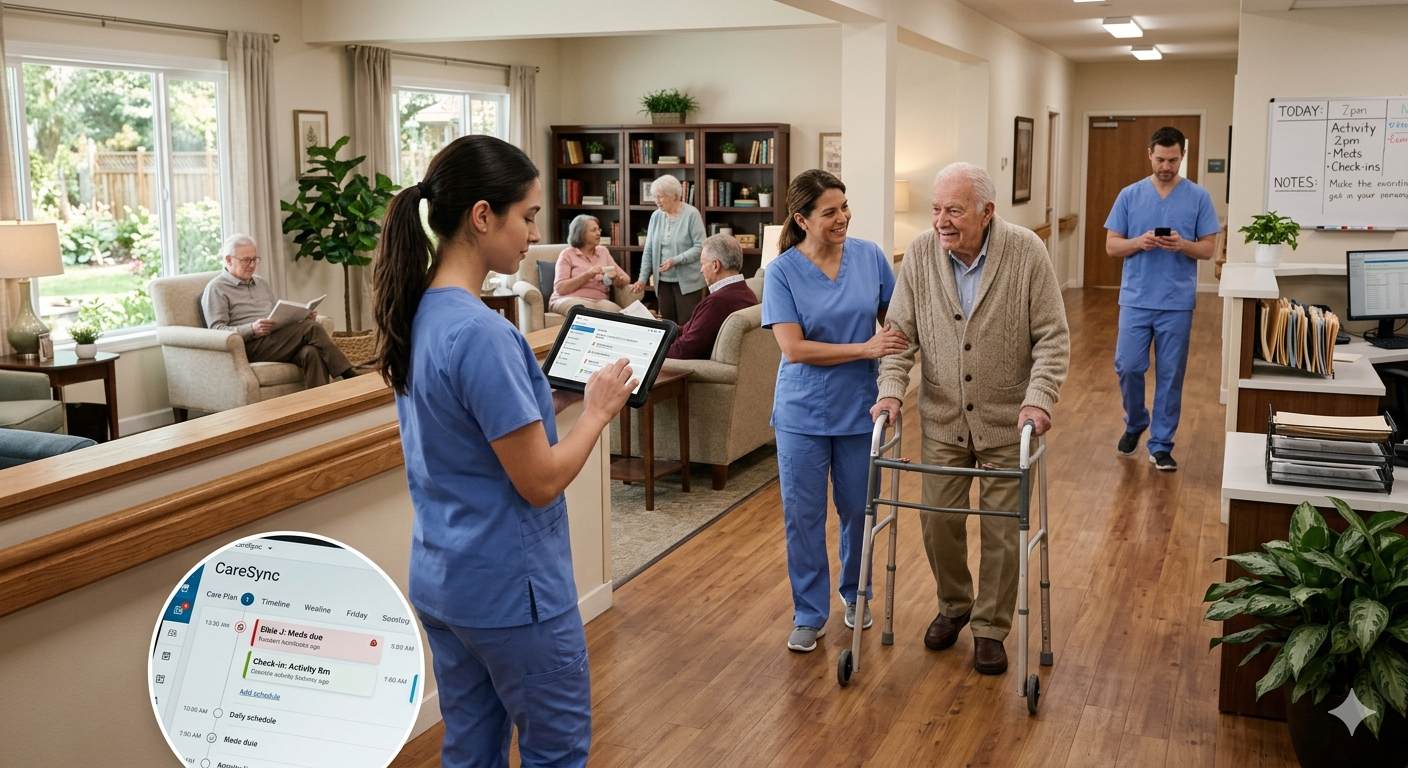
In a senior care setting, this usually includes resident profiles, care plans, medication tracking, daily care documentation, wellness monitoring, staff coordination, compliance tracking, and family communication. Instead of juggling paperwork, spreadsheets, and scattered notes, everything lives in one place that staff can access quickly when they need it.
The difference between care management software and general healthcare IT becomes clearer when you look at daily operations. Many traditional systems focus on appointments or clinical encounters. Care management software focuses on continuous care, the ongoing process of supporting a resident’s health every hour of every day. In a busy facility, that continuity is what keeps care consistent across shifts and staff members.
Who Uses Care Management Software?
Care management software is used by organizations that deal with ongoing, coordinated care across multiple roles and responsibilities. These environments are often fast-paced and require constant communication.
Assisted living facilities rely on it to manage resident care plans, medication schedules, staff coordination, and compliance documentation while handling dozens of daily tasks at the same time.
Home health agencies use it to coordinate caregivers working across multiple patient homes, document visits, manage billing, and maintain regulatory compliance without losing track of patient updates.
Residential care homes often operate with smaller teams, where one administrator may handle care coordination, documentation, and family communication. A single platform helps keep everything organized without adding extra administrative burden.
Adult day care programs use care management tools to track attendance, document activities, monitor health observations, and keep families informed throughout the day.
What all these settings share is a constant flow of activity. Residents need support, staff need direction, families need updates, and administrators need oversight. Care management software helps bring order to that complexity and keeps operations running smoothly even during the busiest hours.
The Core Functions of Care Management Software
Care Planning
Inside a busy healthcare facility, care planning is not something that sits in a file cabinet. It is a living document that guides daily work. Each resident has specific needs, routines, and medical conditions that must be followed carefully.
Care management software keeps care plans updated and visible to every authorized caregiver. When a condition changes or a physician updates instructions, the new information becomes available immediately. Staff do not have to rely on memory or handwritten notes, which reduces confusion and helps ensure consistent care.
Documentation and Record-Keeping
Documentation is one of the most time-consuming parts of care management. Every meal, medication, behavior observation, and incident must be recorded accurately.
In a busy facility, this often happens while caregivers are moving between rooms, responding to requests, and managing multiple residents at once. Digital documentation makes this faster and more reliable. Staff can log updates quickly using tablets or computers, creating timestamped records that are easy to review later.
Over time, these records build a complete history of care, which helps administrators, physicians, and regulators understand what is happening inside the facility without relying on scattered paperwork.
Medication Management
Medication management is one of the highest-risk areas in healthcare facilities. Residents often take multiple medications at different times of the day, and even small mistakes can have serious consequences.
Care management software organizes medication lists, schedules, and administration logs in one system. Caregivers receive reminders, track doses, and record administration in real time. This reduces missed doses, prevents duplication, and helps maintain clear accountability across shifts.
In a busy environment, this structure makes medication rounds more organized and less stressful for staff.
Communication and Coordination
Care management depends heavily on communication. Staff members change shifts, physicians visit periodically, families call for updates, and administrators monitor operations throughout the day.
Without a structured system, important information can easily get lost. Care management software keeps communication tied directly to resident records and care activities. Staff can review updates, leave notes, and share important information in a way that stays documented and accessible.
This creates smoother shift transitions and reduces the risk of misunderstandings, especially during busy periods.
Alerts and Proactive Monitoring
One of the most valuable aspects of care management software is its ability to highlight what needs attention.
Instead of waiting for problems to appear, the system can alert staff about irregular wellness patterns, upcoming assessments, expiring certifications, or missed care tasks. These reminders help facilities stay ahead of potential issues and maintain consistent standards of care.
In a busy healthcare facility, proactive alerts help administrators and caregivers focus on what matters most at the right time.
Compliance Management
Regulatory compliance is a constant concern in healthcare settings. Facilities must maintain accurate documentation, follow state regulations, and be prepared for inspections at any time.
Care management software organizes compliance-related information in a structured and accessible way. Licensing forms, documentation records, and staff certifications are tracked and stored digitally, making it easier to prepare for audits and inspections without last-minute stress.
This reduces administrative pressure and helps facilities stay compliant while focusing on resident care.
The Difference Between Good and Great Care Management Software
The features list only tells part of the story. Here’s what actually separates platforms that transform operations from ones that create new problems:
Designed for care, not adapted from something else. Platforms built for senior care understand the specific regulations, workflows, and operational rhythms of the environment. Generic healthcare software often lacks the depth needed for residential care.
Staff actually use it. The most sophisticated platform in the world fails if caregivers find it confusing or time-consuming. Ease of use is a clinical quality issue, if documentation is difficult, caregivers will skip steps.
It improves communication, not just storage. Care management isn’t just about storing information, it’s about moving the right information to the right people at the right time. Platforms with strong communication features built into the workflow outperform those that treat communication as an afterthought.
It scales with your organization. Whether you run one facility or ten, the software should grow with you, adding users, locations, and capabilities without requiring a platform change.