Nursing homes operate at one of the highest levels of complexity in all of long-term care. On the surface, most people see resident care, staff coordination, and regulatory compliance. What often goes unnoticed are the hidden operational challenges that sit behind daily operations. Managing medically fragile residents, coordinating large and diverse teams, maintaining compliance, handling Medicare and Medicaid billing, and responding to family expectations all happen at the same time, every single day.
This is where modern nursing home software quietly becomes essential. It is not just about technology. It is about solving operational challenges that slow facilities down, create risk, and put pressure on staff. This guide explains what nursing home software does in 2026, the operational problems it addresses, what has changed in recent years, and how the right platform helps facilities run more smoothly and sustainably.
What Is Nursing Home Software?
Nursing home software is a comprehensive digital management platform built for skilled nursing facilities and long-term care homes. It brings clinical, operational, and administrative functions into one system, replacing the mix of paper records, disconnected tools, and spreadsheets that many facilities still rely on.
At its core, the platform manages resident clinical records, care planning, medication administration, staff scheduling, billing, compliance documentation, and communication with families and providers. Instead of managing each of these areas separately, everything is connected in one environment that supports daily operations.
In 2026, most leading platforms are cloud-based and mobile-accessible, with built-in analytics that help administrators and clinical teams identify problems early and make better operational decisions. The goal is simple. Reduce friction in daily work so staff can focus more on care and less on coordination.
The Regulatory Landscape in 2026
One of the biggest hidden operational challenges in nursing homes is regulatory pressure. Compliance is not just about passing inspections. It requires constant documentation, accurate reporting, and consistent adherence to federal and state requirements.
The Centers for Medicare and Medicaid Services continues to tighten expectations around quality of care, staffing levels, infection control, and resident rights. State health departments conduct detailed inspections that require organized and accessible documentation. Public quality ratings also add pressure, since families and referral partners often look at these scores before choosing a facility.
For administrators and nursing teams, this creates a heavy operational burden. MDS completion, QAPI documentation, staffing reports, incident tracking, and licensing records all require time and precision. Managing these requirements manually or through outdated systems makes an already demanding environment even harder to manage.
Software helps by organizing documentation, automating reporting, and keeping facilities prepared for inspections at all times. Instead of scrambling before surveys, teams can operate with confidence knowing their records are already structured and accessible.
Core Features That Address Daily Operational Challenges
Clinical Documentation and Care Planning
One of the most common hidden challenges in nursing homes is maintaining consistent and accurate clinical documentation. Residents often have complex health conditions that require detailed and constantly updated care plans.
Without a structured system, documentation becomes fragmented. Notes get delayed, care plans become outdated, and communication gaps start to appear between shifts.
Nursing home software keeps care plans updated in real time and makes them accessible to the entire care team. Nurses, caregivers, and administrators all work from the same information, which reduces confusion and improves consistency in resident care.
eMAR and Medication Management
Medication management is another area where operational pressure builds quickly. Residents may take multiple medications at different times of the day, and staff must follow strict administration schedules.
Manual tracking increases the risk of missed doses, incorrect documentation, or communication breakdowns between shifts. These small issues can quickly turn into serious compliance or safety concerns.
Electronic Medication Administration Records organize medication schedules, track administration, and provide alerts for missed or delayed doses. This reduces stress for nursing staff and creates a safer and more controlled medication process.
MDS and Regulatory Reporting
MDS completion and regulatory reporting require careful coordination across clinical and administrative teams. Missing information or incorrect data can delay reimbursements and create compliance risks.
This is often one of the most time-consuming operational tasks in a nursing home. Staff must gather information from multiple sources and ensure that assessments are completed accurately and on time.
Software simplifies this process by organizing data, tracking assessment schedules, and guiding staff through documentation requirements. This reduces administrative workload and helps facilities maintain accuracy in reporting.
Staff Scheduling and Management
Staffing is one of the most difficult operational challenges in nursing homes. Facilities operate around the clock and must maintain proper skill ratios, certifications, and regulatory staffing levels.
Last-minute call-outs, shift changes, and certification expirations create constant pressure for administrators. Managing this manually can lead to scheduling conflicts and compliance risks.
Scheduling tools help organize shifts, track certifications, and maintain staffing requirements automatically. Administrators gain better visibility into staffing coverage, which reduces stress and improves operational stability.
Billing and Revenue Cycle
Billing is another hidden operational challenge that affects financial stability. Nursing homes deal with Medicare, Medicaid, managed care, and private pay, each with its own documentation and billing rules.
Disconnected systems often lead to delays, errors, and missed reimbursements. Over time, this creates revenue leakage and administrative frustration.
Integrated billing tools connect clinical documentation to claims and reimbursement tracking. This improves accuracy, speeds up payments, and gives administrators better financial visibility.
Family Communication and Transparency
Family communication has become a major operational priority in recent years. Families want regular updates, clear communication, and transparency in care.
Without structured tools, staff spend significant time responding to calls and emails, which adds to their workload.
Software platforms provide secure communication channels and structured updates, making it easier to keep families informed without disrupting daily care operations. This builds trust and reduces communication pressure on staff.
What Has Changed in 2026
Several changes in the industry are reshaping how nursing home software supports operations.
Data analytics now helps identify residents at risk for falls or health decline before serious issues occur. This allows facilities to act early and prevent incidents.
Interoperability has become more important as nursing homes coordinate with hospitals, physicians, and home health agencies. Systems that support data sharing improve continuity of care and reduce administrative friction.
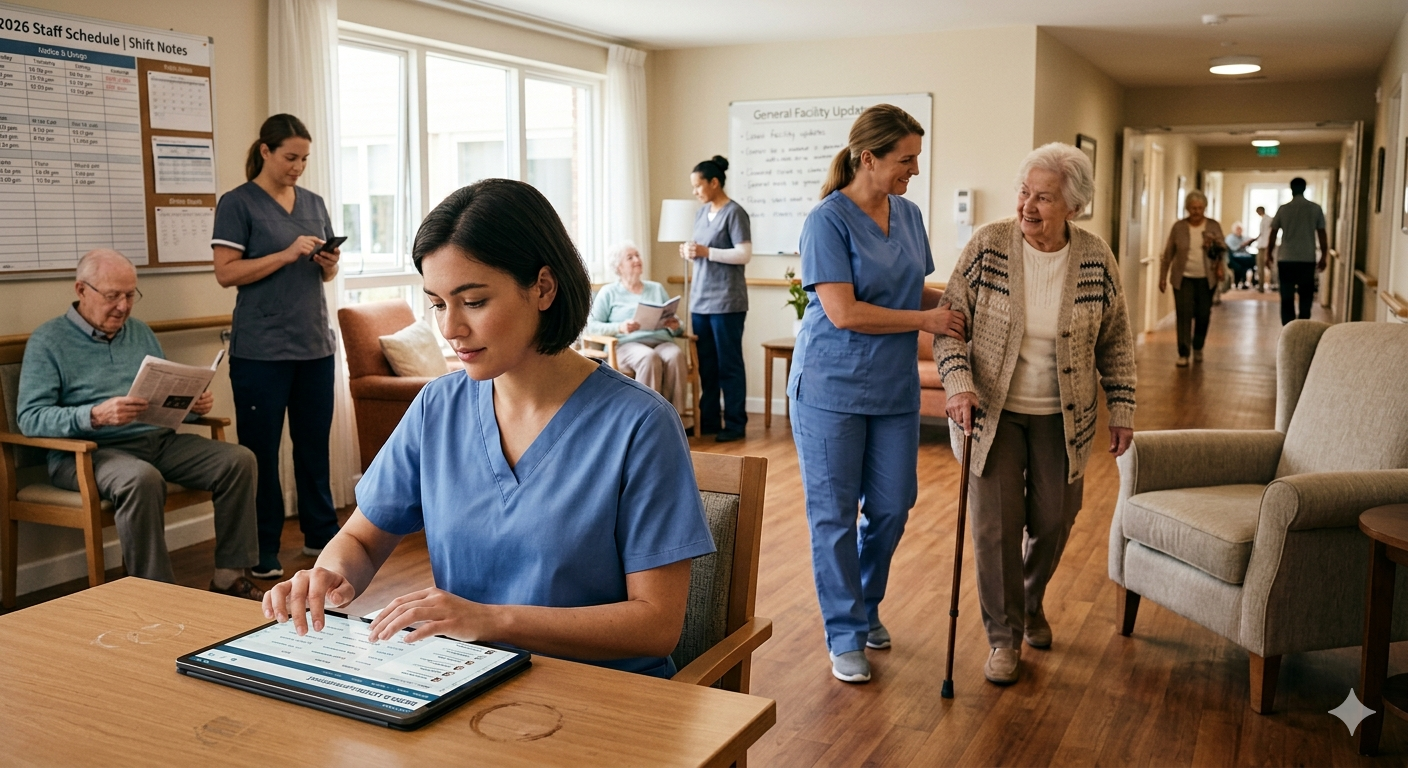
Mobile-first design has also changed how staff interact with software. Nurses and caregivers document care directly at the point of service, which improves accuracy and saves time.
Cybersecurity has become a priority as healthcare data breaches increase. Facilities now expect strong data protection, clear security protocols, and reliable backup systems.
These changes reflect a broader shift from simple record-keeping to full operational support.
Selecting the Right Platform for Your Facility
Choosing nursing home software requires careful evaluation of operational needs.
Facilities should look for platforms that support regulatory requirements, provide smooth implementation, and offer reliable customer support. Understanding the total cost, including training and integrations, is also important.
Speaking with other nursing homes that use the platform can provide valuable insights into real-world performance and reliability.
The right platform should feel like an operational partner, not just another tool.