
Choosing an assisted living community requires more than comparing room sizes, amenities, and monthly fees. Families need to understand how a facility operates, how residents are treated, and whether the community can provide appropriate support as care needs change.
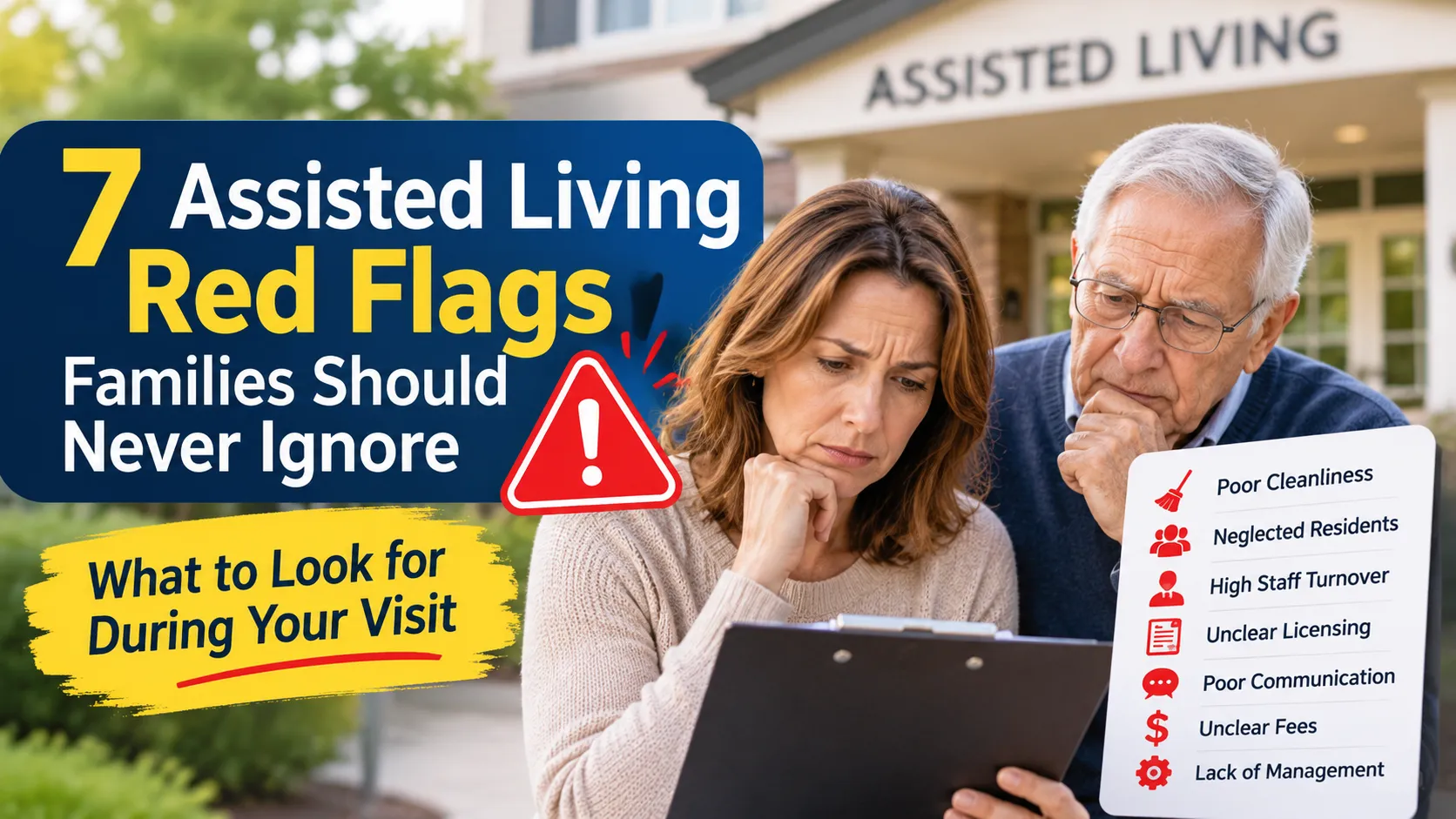
When visiting local assisted living facilities, pay attention to warning signs that may not appear in brochures or online reviews. These seven red flags can help families ask better questions and make a more informed decision.
1. Poor Cleanliness and Maintenance
A facility should maintain clean, comfortable, and safe living spaces. Unpleasant odors, dirty common areas, overflowing trash, damaged furniture, and poorly maintained bathrooms may indicate problems with housekeeping or management.
During your visit, check resident rooms, dining areas, hallways, and shared spaces. Ask how frequently cleaning and maintenance are performed.
2. Residents Appear Neglected or Uncomfortable
Observe how staff interact with residents. Repeatedly unanswered calls, residents left unattended when they need assistance, or staff speaking impatiently may indicate concerns about care quality.
Ask how the facility handles personal care, medication reminders, mobility assistance, and emergencies. A well-managed community should have clear procedures for meeting residents’ daily needs.
3. High Staff Turnover and Limited Caregiver Availability
Frequent employee changes can affect consistency and residents’ relationships with caregivers. If staff members seem overwhelmed or there are too few employees available, residents may not receive timely assistance.
Ask management about staffing levels, employee turnover, training, and how coverage is maintained during nights, weekends, and holidays.
4. Unclear Licensing and Certification Information
Assisted Living Licensing requirements vary by state and jurisdiction. A facility should be able to explain its licensing status and provide information about inspections or regulatory findings.
Ask to see current licensing documentation and check whether the community has unresolved violations or complaints through the relevant state regulatory agency.
Also ask what assisted living certification or staff credentials are required for the services being provided. Do not assume that a facility’s marketing claims replace official licensing requirements.
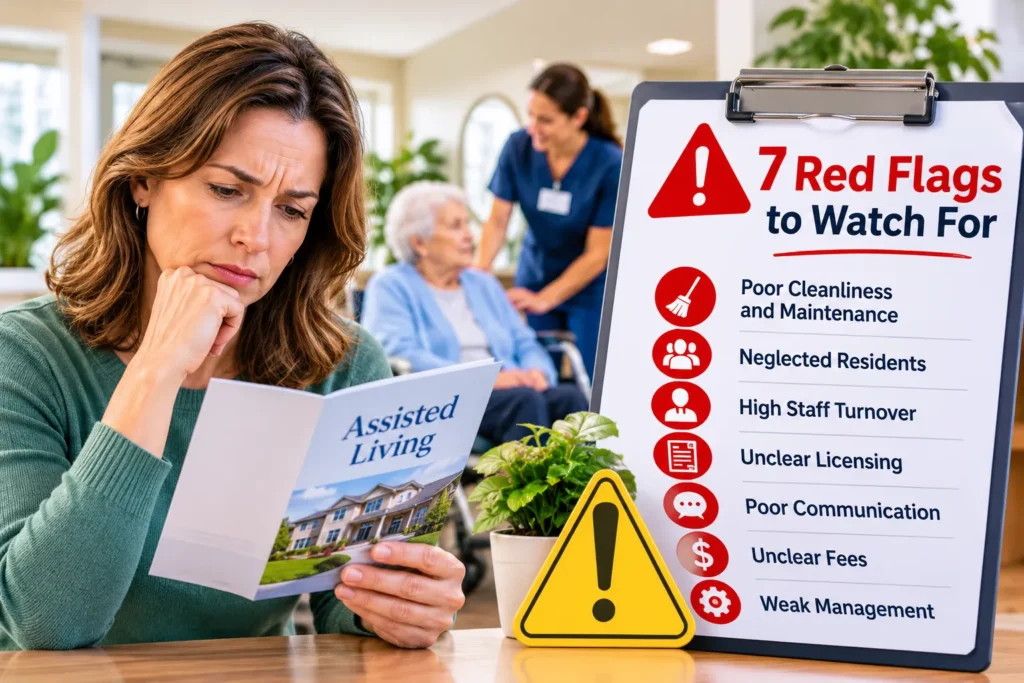
5. Poor Communication From Management
Clear communication is essential when families need updates about a resident’s well-being, changes in care, or unexpected incidents.
Be cautious if management avoids direct questions, gives inconsistent answers, or cannot explain how families are notified about emergencies and health concerns.
Ask who your primary contact will be and how quickly the facility typically responds to family inquiries.
6. Unclear Fees and Service Agreements
A low advertised monthly rate may not include every service a resident needs. Additional charges may apply for medication assistance, personal care, transportation, laundry, or specialized support.
Before signing an agreement, request a complete fee breakdown. Review:
- Monthly accommodation costs
- Additional care charges
- Medication-related services
- Move-in and community fees
- Deposit and refund policies
- Conditions for future price increases
Compare the full cost with the services included rather than relying on the advertised starting price.
7. Lack of a Clear Business and Care Management Structure
A well-run Assisted Living Business needs organized operations, trained staff, financial planning, and clear care procedures. If management cannot explain responsibilities, emergency protocols, or how resident needs are reviewed, it may indicate weaknesses in operations.
This is also important for Assisted Living Operators and Assisted Living Investors evaluating a community’s long-term performance. Operational problems can affect resident satisfaction, regulatory compliance, and financial stability.
What to Ask During an Assisted Living Facility Visit
Prepare questions before visiting so you can compare communities consistently.
- What services are included in the monthly fee?
- How many staff members are available during each shift?
- How are medication and care needs managed?
- What happens if a resident needs more advanced care?
- How are complaints and emergencies handled?
- Can families review inspection reports?
- What is the process for changing or ending a residency agreement?
Take notes during each visit and request written answers when important details are unclear.
When Should You Consider Assisted Living Consulting Services?
Families usually focus on resident care, but opening, managing, or investing in a senior living community involves additional responsibilities.
Assisted Living Consulting can help operators and investors evaluate business plans, operational procedures, staffing structures, and regulatory requirements.
An assisted living facility consultant may also help review licensing requirements, prepare for inspections, identify operational gaps, and develop policies. Businesses seeking assisted living consulting services should look for professionals with relevant industry and regulatory experience.
For someone developing a residential assisted living business, professional guidance can be especially useful when evaluating property suitability, startup costs, licensing, and ongoing management requirements.
Frequently Asked Questions
What should I look for when visiting local assisted living facilities?
Check cleanliness, staff availability, resident interactions, safety procedures, licensing information, and fee transparency. Ask questions and observe how the community operates during your visit.
How can I check whether an assisted living facility is licensed?
Contact the relevant state licensing agency or use its official online database. Review current licensing status, inspection findings, and available complaint records.
What is the difference between assisted living operators and investors?
Assisted living operators manage daily facility operations and resident services. Investors generally provide capital or own assets and may not participate in everyday management.
What does an assisted living facility consultant do?
An assisted living facility consultant may advise on licensing, business planning, staffing, operational procedures, compliance, and facility development.
Are the largest senior living companies always the best choice?
Not necessarily. A company’s size does not guarantee quality of care. Families should evaluate individual locations, staffing, services, inspection records, and resident experiences.
When should a residential assisted living business seek consulting services?
Consulting can be valuable during startup planning, licensing, operational changes, compliance reviews, or expansion into additional locations.