There is a version of healthcare technology that still lives on servers inside a storage room or IT closet. It requires constant maintenance, scheduled upgrades, local network support, and technical oversight to keep running. When the system goes down, access to records and operations slows or stops completely. Then there is the cloud.
Cloud-based healthcare software runs on remote servers managed by the vendor, can be accessed from any device with an internet connection, and updates automatically without requiring in-house technical support. For assisted living facilities, senior care organizations, and home health agencies, this shift is no longer just a technology upgrade. It is becoming an operational necessity that supports faster decisions, better coordination, and more reliable care delivery.
What Cloud-Based Healthcare Software Actually Means
When healthcare software is described as cloud-based, it means the application and data are stored on remote servers instead of local hardware inside the facility. These servers are typically operated by large cloud infrastructure providers with advanced security and reliability systems.
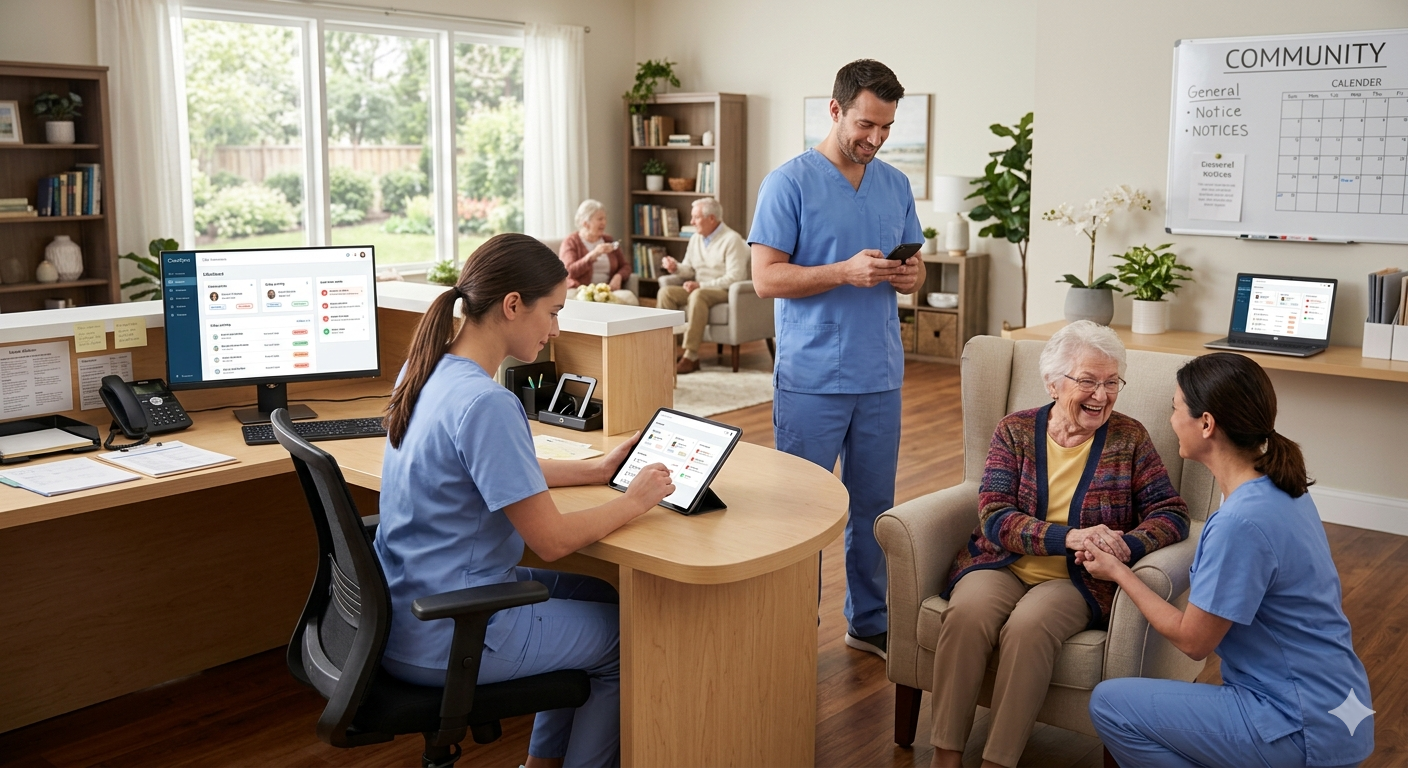
For care facilities, this changes how daily operations work. Staff can log in from a nursing station computer, a caregiver’s tablet, or an administrator’s phone at home. Information updates in real time, backups happen automatically, and the vendor manages system performance and security.
This is very different from traditional on-premises systems, which rely on local servers, internal IT teams, and manual updates. Many small and mid-sized care facilities find these systems difficult to maintain and expensive to upgrade. Cloud-based platforms reduce this burden and make modern technology more accessible.
Why Senior Care Facilities Are Moving to the Cloud
Accessibility Without Boundaries
Care facilities operate around the clock, and staff need access to information at all times. Administrators review reports after hours, caregivers need resident data during visits, and families expect timely updates.
Cloud-based software makes this possible by allowing secure access from anywhere. Staff no longer depend on being physically present at a workstation to review or update information. This flexibility improves responsiveness and helps facilities maintain continuity in care.
Real-Time Synchronization
In healthcare, delays in information can create serious risks. When a caregiver updates a medication record or wellness note, that update should be visible to the entire care team immediately.
Cloud-based systems synchronize information in real time. Incoming staff can see the latest updates, physicians can review care notes, and administrators can monitor activity without waiting for manual data entry or file transfers. This creates a more connected and coordinated care environment.
Cost Structure Advantages
Traditional systems often require large upfront investments in hardware, IT infrastructure, and ongoing maintenance. Facilities must budget for server replacements, software upgrades, and technical support.
Cloud-based platforms operate on predictable subscription models. Facilities pay a monthly or annual fee that includes updates, maintenance, and system improvements. This reduces capital expenditure and allows organizations to plan their technology costs more effectively.
For many care facilities, this predictable cost structure is one of the biggest reasons for moving to the cloud.
Automatic Updates and Compliance Support
Healthcare regulations and compliance requirements change frequently. Facilities must keep their systems updated to remain compliant with privacy laws, licensing rules, and operational standards.
Cloud-based software simplifies this process by delivering automatic updates. Vendors push security improvements, compliance adjustments, and feature enhancements directly to the platform. Staff can continue working without worrying about outdated systems or manual upgrade processes.
This ensures that facilities stay aligned with current regulatory requirements without additional technical effort.
Enterprise-Level Security for Every Facility
Security is often one of the strongest advantages of cloud-based healthcare software. Modern cloud infrastructure includes encryption, access controls, multi-factor authentication, automated backups, and disaster recovery systems.
Most care facilities would find it extremely expensive to build this level of protection on their own. Cloud platforms provide enterprise-grade security as part of the subscription, making advanced protection accessible even to smaller organizations.
This helps reduce the risk of data loss, unauthorized access, and system downtime.
HIPAA Compliance in the Cloud
Data security is usually the biggest concern when facilities consider cloud adoption. Many administrators worry about storing sensitive healthcare data outside their physical building.
In reality, reputable cloud-based healthcare platforms often provide stronger security than local systems. HIPAA-compliant vendors sign Business Associate Agreements, follow strict data protection standards, and undergo regular security audits to verify their practices.
When evaluating a platform, facilities should confirm that HIPAA compliance is built into the system, that a Business Associate Agreement is included, and that the vendor can clearly explain how data is protected. Clear and transparent security practices are a strong indicator of a reliable platform.
Cloud Software in Action: A Typical Day in an Assisted Living Facility
To understand why cloud-based software is becoming essential, it helps to look at a typical day inside a care facility.
At 7:00 AM, the day shift caregiver logs in on a tablet and reviews overnight updates for each resident. A wellness flag appears for one resident, and the caregiver alerts the administrator through the platform.
At 9:00 AM, a physician visits and updates the care plan through the provider portal. The changes become visible to all caregivers immediately.
At 2:00 PM, the administrator receives a notification on their phone about a caregiver’s certification that needs renewal and schedules training through the system.
At 6:00 PM, the evening shift reviews real-time notes and takes over with full context of the day’s events.
This is not just a technology improvement. It is a smoother and more coordinated way of managing care operations.
Considerations Before Making the Move
Cloud-based software is the right fit for most modern care facilities, but a few practical factors should be considered before implementation.
Internet reliability is important because cloud platforms depend on stable connectivity. Facilities should ensure they have reliable broadband and a backup connection if needed.
Staff comfort with technology also matters. Even user-friendly systems require training and onboarding to ensure smooth adoption.
Data migration should be planned carefully when moving from an existing system. Reliable vendors usually support this process and guide facilities through the transition.
Vendor stability is another key factor. Facilities should evaluate the provider’s track record, customer base, and long-term reliability before committing.
The Future Is Already Here
Cloud-based healthcare software is no longer an emerging trend. It is becoming the standard for modern care facilities that want efficient operations, strong compliance, and better coordination across teams.
Facilities that adopt cloud-based systems are able to adapt faster, integrate new technologies more easily, and maintain consistent care standards. As analytics, remote monitoring, and predictive care tools continue to evolve, they will be delivered primarily through cloud platforms.
Organizations that move to the cloud today position themselves for smoother operations and stronger care delivery in the years ahead.