Talk to any administrator or senior caregiver about what causes the most problems in their facility, and communication comes up almost every time. Not clinical complications. Not staffing shortages. Communication.
A note that did not get passed on. An update the incoming shift never received. A family member who could not get a clear answer about their parent’s condition. A care plan change that only a few caregivers actually saw.
These small breakdowns add up quickly. They affect care quality, create compliance risks, and put unnecessary pressure on staff. In senior care, communication is not just an operational detail, it is a core part of how care is delivered. Healthcare communication platforms are designed to bring structure and reliability to this process.
What Is a Healthcare Communication Platform?
A healthcare communication platform is a secure system that manages how information moves across a care organization. It connects caregivers, administrators, families, and external providers in one structured communication environment.
Unlike general messaging tools such as SMS or email, these platforms are built specifically for healthcare. They are HIPAA-compliant, role-based, audit-logged, and integrated into care workflows where communication actually happens.
In a senior care setting, this means the right information reaches the right person at the right time without relying on scattered messages, handwritten notes, or verbal updates that can easily be missed.
Why General Communication Tools Fail in Senior Care
Many facilities still rely on regular messaging tools, and this often leads to serious communication gaps.
HIPAA compliance is one of the biggest concerns. Sending resident health information through standard messaging apps or personal texts creates legal and regulatory risks, even when the intention is simply to share updates quickly.
There is also the issue of accountability. Personal messages and email chains do not create a reliable audit trail. When an incident happens and administrators need to review who communicated what and when, fragmented communication makes it difficult to trace.
Fragmentation itself becomes a daily operational problem. Updates may exist in text messages, paper notes, shift logs, and verbal handoffs at the same time. This increases the chance that important care information gets lost in the process.
Another limitation is the lack of workflow integration. A message about a resident incident does not automatically update documentation, notify supervisors, or trigger care plan adjustments. It becomes just another message instead of an actionable update.
What a Healthcare Communication Platform Does in Practice
Secure Messaging and Care Notes
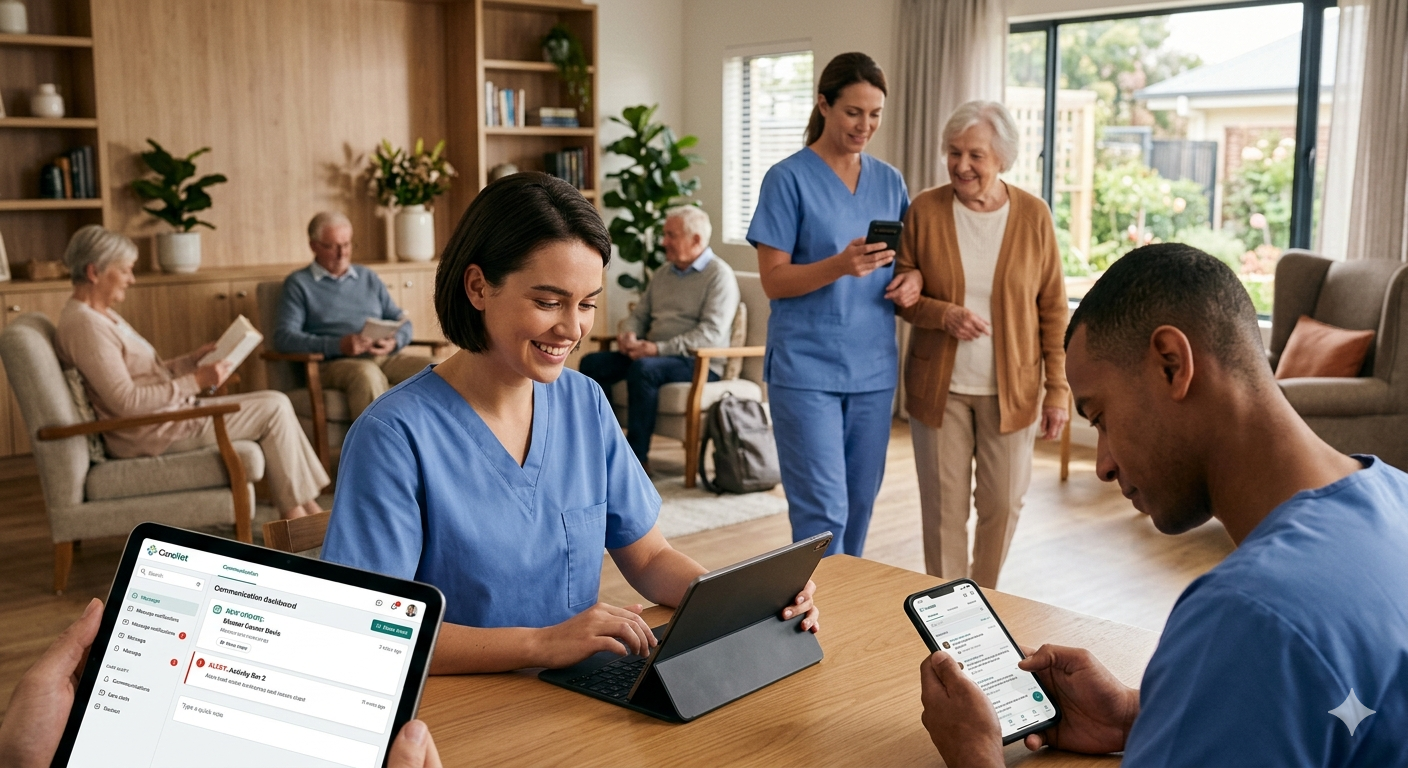
Healthcare communication platforms provide secure messaging between care team members within a structured system. Messages can be linked to residents, care topics, or operational discussions, making them easy to search and review later.
Instead of relying on memory or scattered notes, caregivers and administrators can quickly access past updates and stay aligned on care decisions.
Shift Handoff Communication
Shift changes are one of the most sensitive moments in senior care. The outgoing team often holds important details that the incoming team needs to know immediately.
Digital handoff tools ensure that updates, care notes, and alerts are documented and ready before the next shift begins. This reduces confusion and helps caregivers start their shift with a clear understanding of resident needs.
Family Communication
Families want transparency and timely updates about their loved ones. Constant phone calls and emails can overwhelm administrative staff and still fail to provide consistent communication.
Secure family portals allow facilities to share updates, respond to questions, distribute care plans, and collect electronic signatures in a structured way. This reduces communication pressure on staff and creates a clear record of family interactions.
Provider and Physician Coordination
Senior care facilities frequently interact with physicians, therapists, and other external providers. Communication gaps between facilities and providers can slow down care decisions and documentation.
A communication platform connects these stakeholders to resident records and updates, allowing providers to review information, share assessments, and coordinate care more efficiently.
Alerts and Notifications
Automated alerts help facilities respond to issues in real time. Notifications about missed medications, expiring certifications, or unusual wellness readings ensure that administrators and caregivers can take action immediately.
This shifts communication from reactive to proactive and helps prevent small issues from becoming serious problems.
Language Translation
Many senior care facilities operate with multilingual teams. Communication barriers can lead to misunderstandings or delays in care coordination.
Platforms with built-in translation tools help ensure that all caregivers receive clear instructions and updates in a language they understand, improving teamwork and reducing errors.
The Impact on Care Quality
Better communication directly improves care quality in senior care facilities.
When updates are documented and visible to the entire team, medication errors decrease because everyone is working with the same information. Missed care events become less common because tasks and responsibilities are clearly assigned and tracked. Regulatory inspections become smoother because communication records are organized and easy to retrieve.
Staff morale also improves. Caregivers feel more confident when they understand what is happening with their residents and have clear channels to raise concerns or ask for support. Instead of starting each shift trying to gather information, they can focus on delivering care.
Over time, this creates a more stable and reliable care environment for both residents and staff.
What to Look for in a Healthcare Communication Platform
HIPAA compliance and audit trails should always be the first priority. Every message, document, and notification must be secure, encrypted, and properly logged.
Integration with care workflows is equally important. Communication tools should work alongside resident records, care planning, and medication management systems so that information flows naturally within daily operations.
Mobile accessibility is essential because caregivers spend most of their time moving between residents and care tasks. The platform should work smoothly on smartphones and tablets, not just desktops.
Ease of use also matters. If the system is complicated, staff will revert to informal communication methods, which defeats the purpose of the platform.
Finally, family communication features should be considered since families play a central role in senior care and need structured, reliable updates.