
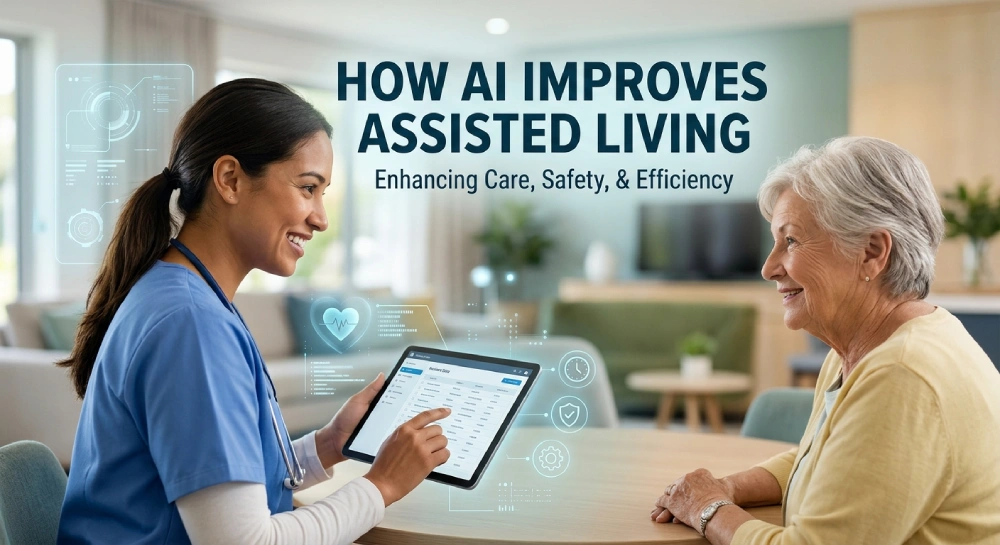
AI in assisted living can help senior communities manage everyday tasks, improve safety, and support caregivers. As staff manage more paperwork, scheduling, and the needs of residents, AI technology can reduce the amount of work that is repetitive and make vital documents simpler to manage.
This article discusses how assisted living companies are able to use AI to provide safer communities, better care and more efficient daily operations.
How AI in Assisted Living Improves Care
Starting with one practical use case can help providers introduce AI in assisted living without disrupting existing workflows.
AI helps caregivers organize the information of residents and spot any changes that require attention. For instance an AI system could organize notes on care, reminders, or other information on activities so that staff can read it with greater efficiency.
In communities for memory care, AI may also support reminders, routine monitoring and individualized care activities. AI should assist caregivers, not replace their judgement.
How AI Technology Can Improve Resident Safety
Safety is among the most beneficial ways to use AI technology for assisted living. Based on the technology, AI can monitor certain patterns of activity and issue alerts when something odd happens.
It can assist with:
- Fall-risk monitoring
- Alerts for unusual activity
- Monitoring routinely
- Notifications for emergencies
- Environmental monitoring
Workflow Automation Saves Staff Time
Administrative tasks can consume the staff time. Automation of workflows can assist in managing routine tasks, such as scheduling, reminders, information organization, and routine communication. AI in assisted living can help communities automate these routine workflows.
As an example instead of having to manually sort daily data, employees can get organized summaries that are easy to look over. This makes everyday tasks easier and more uniform.
How AI Supports Assisted Living Documentation
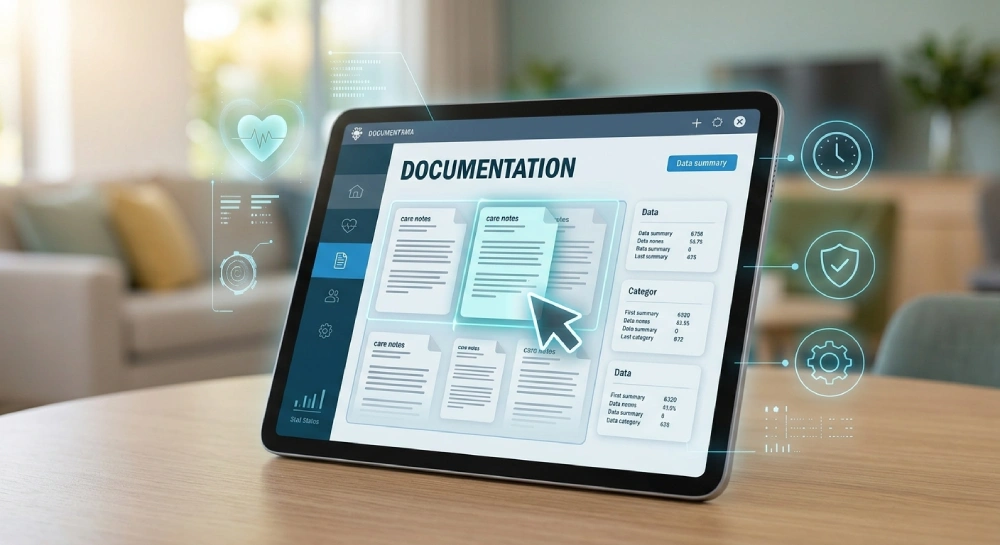
Documentation support is another area where AI in assisted living can save staff time. AI can help organize care notes, summarize routine information, and make important details easier for caregivers to review.
Instead of manually sorting through large amounts of daily information, staff can use AI to create organized summaries or assist with routine documentation. This can make records more consistent and reduce the time spent on repetitive paperwork.
- organizing care notes
- summarizing routine information
- reducing repetitive documentation
- making records easier to review
- identifying missing information
- human review before records become official
Protecting Resident Data When Using AI
Data security is crucial in the use of AI in the field of senior care. It is important for caregivers to know what data an AI system gathers as well as where it’s kept, who is able to access it and how it’s secured.
Prior to deciding on an AI solution, vendors should examine privacy practices, security and privacy controls, as well as staff permissions, as well as vendor policies. Providers using AI in assisted living should also make sure their systems follow appropriate privacy and security practices.

How Assisted Living Providers Can Start Using AI
An easy way to do this is to start small.
- Pick a problem to tackle: Start by completing documentation, scheduling or some other task that is repetitive.
- Comparing AI solutions: Review accuracy, security, ease of use, and integration.
- Test the system: Run a small test before expanding it across the community.
- Employees are trained: Ensure that employees know how to use and analyze AI outputs.
- Evaluation of results: Determine if the technology actually reduces time or enhances workflows.
AI should be implemented in order to make the day to day work process run smoother. It can perform simple paperwork and organize the staff’s work load. This will leave them with more time to deal with the residents and their needs.
Conclusion
AI in assisted living may improve safety, care and efficiency if used responsibly.AI technology can help reduce the amount of administrative tasks that are repetitive and help caregivers. It also aids in monitoring the workflow, documentation, and automation.
Human judgment should always come first when caring for residents. Providers should also focus on privacy and data security, staff training, and easy to use technology. Beginning with a practical need could aid in making AI adoption more simple and efficient.
Frequently Asked Questions
What is AI in assisted living?
AI for assisted living utilizes artificial intelligence to assist caregivers, enhance processes, manage information, and increase safety for residents. It assists staff to complete routine tasks faster while making sure that human care is at the heart of everything.
How can AI improve resident safety?
AI can track specific patterns of activity and send alerts when suspicious behavior or risks are identified. Staff members can then look over the alert to decide the best action to take.
Can AI replace assisted living caregivers?
No. AI is developed to help caregivers but not substitute for them. Human caregivers provide the emotional and physical support in communication, as well as professional judgement that technology is unable to offer.
How does AI help memory care communities?
AI will help you with reminders, routine monitoring, documenting and customizing actions. AI tools can help staff give more consistent assistance for residents who require additional assistance.
Can AI reduce administrative work?
Yes. AI is able to assist in repetitive tasks like documentation, scheduling, data management, and routine communication. This will allow staff time to spend on the needs of residents.
Is AI safe for assisted living providers?
AI is safe if it is correctly implemented and closely monitored. The providers should assess accuracy and security, privacy personnel training, as well as the oversight of humans prior to implementing the AI solution.
How does AI support documentation?
AI can assist in organizing data, make notes more concise and organize documentation. Staff should be sure to examine AI-generated material for accuracy prior to including it in official documents.
Why is data security important when using AI?
AI systems can manage sensitive resident data and data security is crucial. Data providers should be aware of how data is stored, collected and accessed. It is also important to understand how data security is secured.
What AI solutions can assisted living communities use?
Common solutions can include security monitoring and workflow automation, document support and scheduling tools, as well as communications systems, and platforms for data analysis. The best choice is contingent on the particular needs of your community.
How should an assisted living provider start using AI?
Begin with a clear issue that you can solve, like reducing documentation time or enhancing the scheduling. Try the technology on a limited scale, then train employees to review the results and increase its use in cases where it has clear benefits.