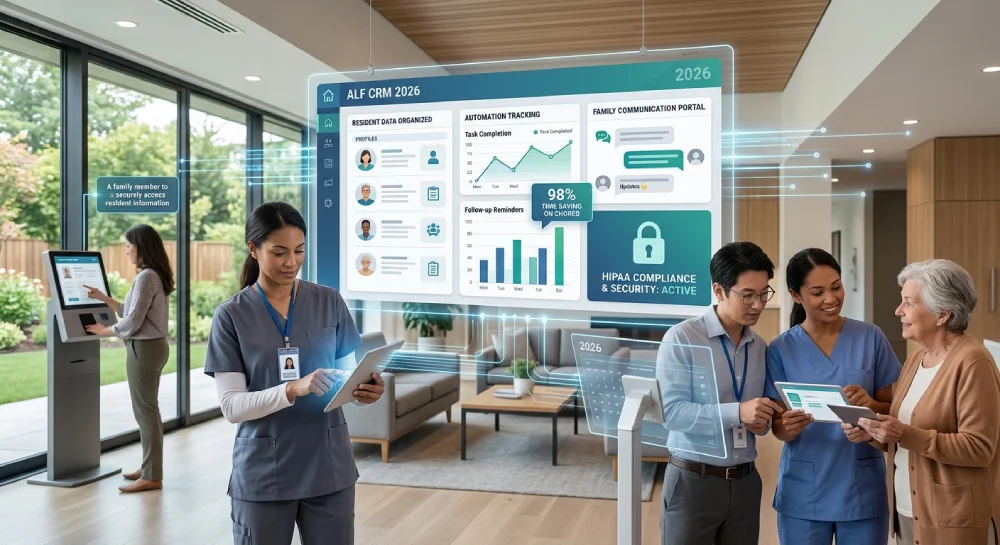
Routine administrative tasks, as well as admissions and follow-up, family communication, and staff coordination are often handled by teams. The more these chores increase, the better it is to have the right software to make them easier and maintain important information.
In 2026, it’s not just about another tool. Assisted living facilities require software that is flexible to their workflow, secure for sensitive data and will continue to serve their needs as their needs evolve.
Why Do Assisted Living Facilities Need Better Software?
A significant number of communities continue to use disconnected spreadsheets, email, paper or multiple systems for various activities. This can lead to duplication of effort and make critical information more difficult to locate.
The appropriate assisted living CRM system will be able to organize resident and prospect data into a well-structured system. It will also provide for admissions, follow-ups, communication, and other administrative tasks.
How Can CRM Automation Save Time?
CRM automation can automate tasks that would otherwise need to be done by staff members. Some examples of things that automation can help with include:
- Follow-up reminders
- Inquiry tracking
- Appointment notifications
- Task assignments
- Communication workflows
- Status updates
This can assist teams to keep organized, and can lower down the risk of an essential follow up being forgotten.
Why Is CRM Customization Important?
Each community is unique. The system that’s suitable for a general business might not be the same that’s used by senior care providers.
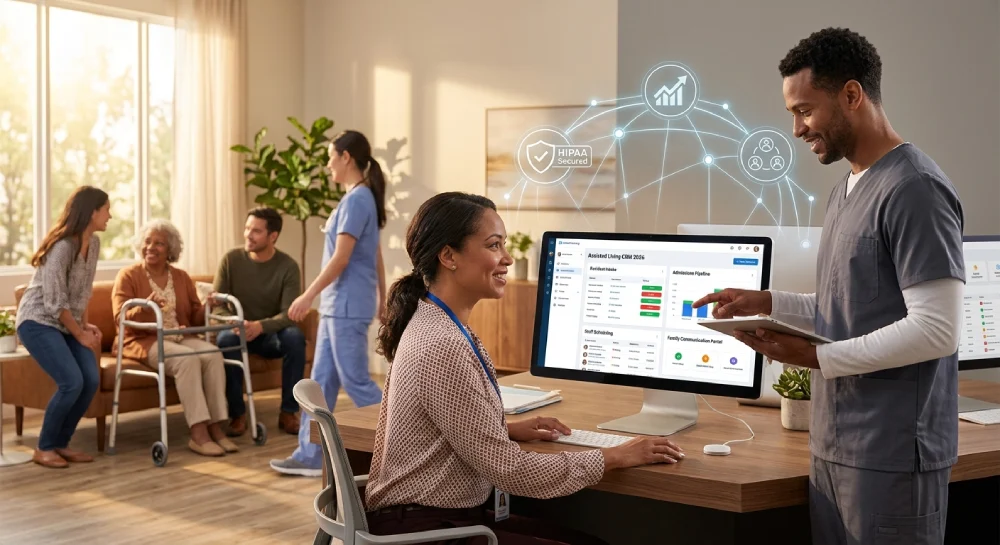
CRM customization can help organizations tailor their fields, workflows, dashboards, and processes to suit their needs. For instance, a community could have a different tracking system for inquiries, tours, family communications, move-in phases or preferences of the residents.
A flexible system can be integrated into existing workflows, instead of forcing employees to adapt all processes to the software.
How Does CRM Usability Affect Staff Adoption?
But even the best software can be of little value if it is hard for staff to use. CRM usability has an impact on the learnability of the system, task completion, and information access for employees.
When assessing software, take into account:
- Ease of navigation
- Mobile accessibility
- Clear dashboards
- Simple data entry
- The search and reporting functions
- Training requirements
Software should make things easier, not more difficult.
Why Does CRM Scalability Matter?
The needs of a small community may be different from those of a larger organization. CRM scalability enables the system to be used by the business for as many residents, staff, locations or workflows as necessary.
Think about how the software fits in with future requirements and whether or not it can be integrated into the system without the need for a complete change.
What Should You Expect During CRM Implementation?
Implementing CRM is a process that goes beyond software. Organizations must think about the transfer of information, who will be using the system, and training employees.
There may be a smoother implementation process if:
1. Reviewing current workflows.
2. Identifying important data.
3. Cleaning existing records.
4. Configuring the software.
5. Testing the system.
6. Training staff members.
7. Review and measurement after the launch.
When planned, these are steps which can minimize the disruption and maximize the value of the software for the organization.
Why Are Data Security and HIPAA Compliance Important?
When software holds resident/patient-related data, data security must be a primary concern. Organizations need to be aware of the methods used to store, retrieve, backup and protect data.
Depending on what the information is, and the organization, HIPAA compliance requirements may come into play. Restriction on access, authentication, audit, and adequate protections can contribute to the protection of sensitive information.
The software provider and the organization’s processes should be assessed as opposed to taking it on faith that the system is compliant.
Can CRM for Small Business Work for Assisted Living?
Yes, CRM for Small Business is suitable for Assisted Living.
For simpler processes, this might be okay for a general small business CRM.
Assisted living facilities, however, may have more specialized workflows to admit residents, communicate with families, coordinate care, or manage residents. It is helpful to compare features available with the actual required functions to see if a general solution or custom solution is more suited.
Does Better Software Help Support Affordable Assisted Living?
While technology may not be the answer to all cost issues, it could help alleviate unnecessary administrative tasks and provide greater visibility into operations.
By improving workflow management and automation, along with structured communication, communities can optimize staff time. These enhancements could contribute to larger-scale efforts to offer affordable assisted living but still operate efficiently.
How Should Assisted Living Facilities Choose the Right Software?
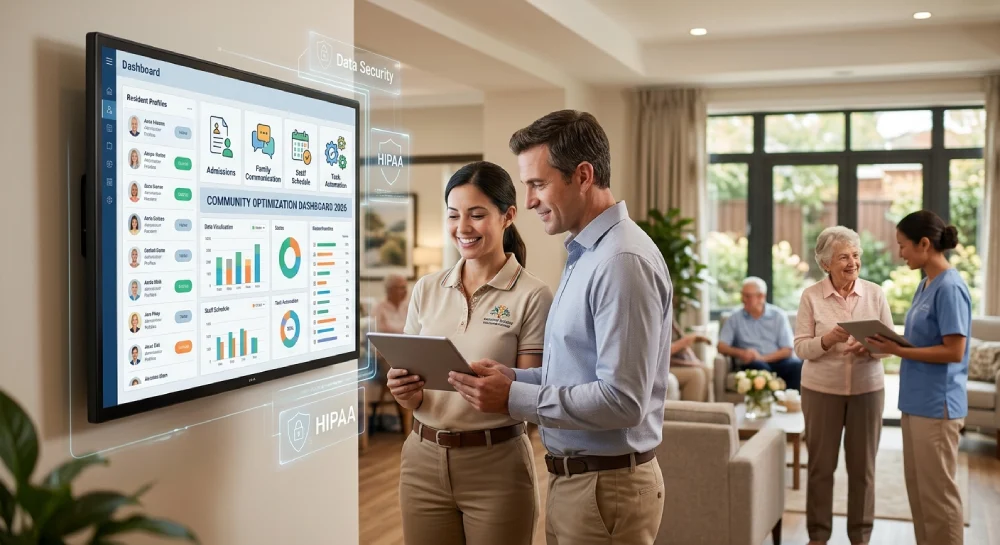
Before picking a platform, define the issues that the software will solve. Don’t pick the system based on the length of the list of features.
Consider:
- Current operational challenges
- Ease of use
- Customization options
- Automation capabilities
- Scalability
- Implementation support
- Security features
- Integration requirements
- Long-term cost
The selection should be one that is suitable for current needs and future growth.
Conclusion
Assisted living facilities can leverage the right technology to help them manage information, optimize workflows and minimize reoccurring administrative tasks. A good assisted living CRM system needs to be user-friendly, customizable, automated, scalable, and secure.
For software in 2026, the key will be to ensure the software supports day-to-day operations well. It may be more beneficial to have a solution that staff feels confident using and can be adjusted when necessary.
Frequently Asked Questions
What software do assisted living facilities need?
Assisted living facilities can have software for admissions, resident information, communications, scheduling, reporting, and workflow. The proper match will depend upon the size and function of the organization
What is an assisted living CRM?
Assisted living CRM software has been created to streamline and handle interactions, inquiries, admissions, follow-up and much more with regards to prospective or current residents.
How does CRM automation help assisted living providers?
CRM automation can save repetitive tasks from having to be done by hand, such as reminders, follow-up tasks, notifications and more.
Why is CRM customization important?
CRM Customization enables an organization to tailor the system to their unique functions. This can be custom fields, reports, stages, dashboards and automated processes.
What is CRM usability?
CRM usability is the ability of the employees to understand and use the software. An easy to use and intuitive system can enhance adoption and shorten training time.
Why is CRM scalability important?
CRM scalability helps ensure that the software can continue supporting an organization as it grows, adds locations, increases staff, or requires more advanced workflows and integrations.
How long does CRM implementation take?
The time required for CRM implementation depends on factors such as system complexity, data migration, customization, integrations, and staff training. Smaller implementations may take less time than complex multi-location projects.
How important is data security in assisted living software?
Data security is essential when software stores sensitive resident or business information. Organizations should evaluate access controls, authentication, backups, encryption, monitoring, and vendor security practices.
Does HIPAA compliance apply to assisted living software?
HIPAA compliance may apply when an organization or its software handles protected health information in circumstances covered by HIPAA. Organizations should evaluate their specific obligations and avoid assuming all software is automatically compliant.
Can affordable assisted living providers benefit from CRM software?
Yes. Providers focused on affordable assisted living may benefit from software that improves organization, reduces repetitive administrative tasks, and helps staff manage inquiries and communication more efficiently.