Assisted living is changing fast. The old ways are fading. Paper charts are out. Digital tools are in. Healthcare innovation is behind this shift. It is making communities safer. It is making care better for everyone.
For a long time, long-term care facilities had problems. Nurses drowned in paperwork. Important details got lost. The staff felt tired and frustrated. Residents did not always get the attention they needed. Something had to change.
Better Tools for Real Healthcare innovation Care
Technology adoption is the answer for healthcare innovation. But here is the thing. This is not about machines taking over. It is about giving caregivers better help. When nurses have the right tools, they can focus on people. Not papers.
Resident care is complicated. There are pills to give. There are diets to watch. There are therapy sessions to track. Doing all this on paper is a headache. Clinical technology fixes that. It organizes everything. It keeps the whole team on the same page.
The Paper Chase Ends
Moving to electronic health record systems or EHR implementation is a big deal. Paper charts are slow. They are hard to read. They get lost. Electronic health medical records solve all that in healthcare innovation.
With electronic health record software, everything is instant. A nurse checks vitals. She types it in. The doctor sees it right then. The next shift nurse sees it too. No delays. No messy handwriting. This makes the clinical workflow smooth. It cuts down on mistakes.
Giving Nurses Their Time Back
Staff efficiency matters. There is never enough time in a shift. Technology gives time back. It handles the boring paperwork. It lets nurses get back to the bedside.
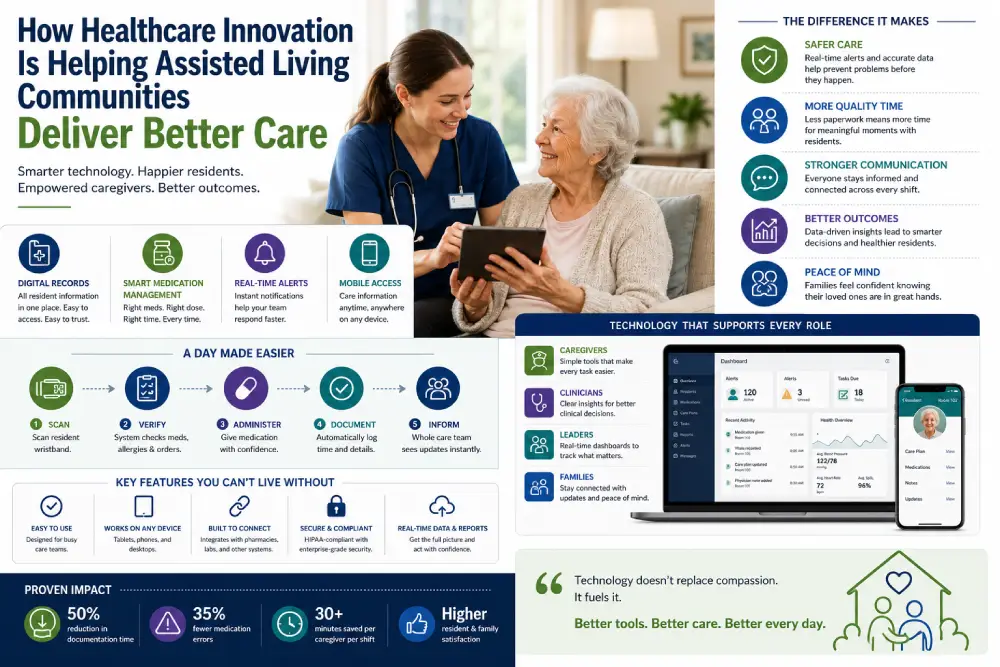
Clinical leaders love this. They want healthcare technology that is simple. They want tools that help, not annoy. Data automation is a lifesaver. A nurse scans a wristband. The system checks the meds. It logs the time. Quick, safe, and accurate. No guesswork.
Knowing Healthcare Innovation Things Right Away
Real-time data changes everything. Doctors see live updates. Not yesterday’s numbers. If a resident’s oxygen drops, an alert pops up. The team jumps in fast. This stops small problems from blowing up.
That is the beauty of healthcare innovation. Healthcare data shows patterns. Maybe falls happen more in the evening. The team adds extra staff. They prevent falls before they happen. That is smart care.
Getting Everyone Comfortable
Change is scary. Staff worry about new systems. They fear they cannot learn them. Smart communities train people well. They show the benefits. They prove it helps residents. A system that saves thirty minutes means more time with residents. That sells itself.
How to Start
Here is a simple path forward:
- Figure out your biggest problems
- Ask nurses what they need
- Find a vendor who gets it
- Start with one small area
- Keep training and supporting staff
Must-Have Features
- Simple to use
- Works on tablets and phones
- Talks to pharmacies and labs
- Keeps data safe and private
The People Who Matter Most
It is all about the residents. They want dignity. They want safety. Families want peace of mind. Technology delivers. It gives everyone confidence that care is top-notch.
Conclusion:
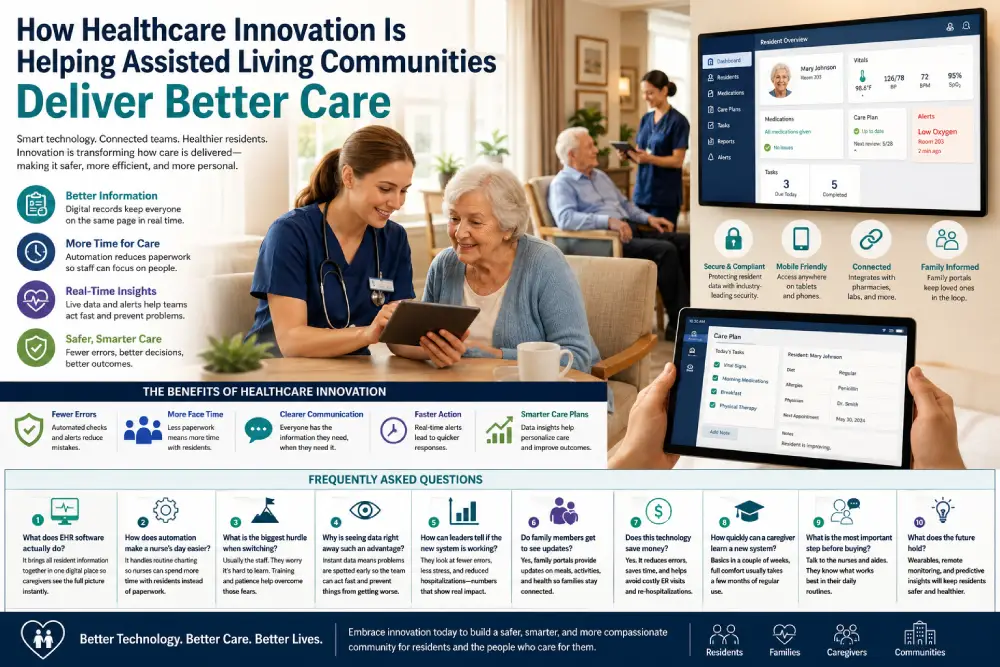
Healthcare innovation brings:
- Fewer errors
- More face time with residents
- Clearer communication
- Faster action
- Smarter care plans
The future is here. Assisted living is getting better every single day. More smart devices are coming. More remote monitoring. Communities that embrace healthcare innovation now will lead the way. They will keep residents happy and staff fulfilled
Frequently Asked Questions
What does electronic health record software actually do in a senior living community?
healthcare innovation pulls together everything about a resident including their medications, doctor orders, and daily notes into one digital spot so caregivers see the whole picture instantly without digging through piles of paper.
How does automation make a nurse’s day easier?
Automation takes over the routine charting so nurses just scan a wristband and click a button instead of writing everything by hand, giving them more time to actually sit and talk with residents.
What is the biggest hurdle when switching from paper to digital records?
The biggest hurdle is usually the staff because they are used to their old ways and worry the new system will be too hard to learn, but solid training and patience smooth out those fears.
Why is seeing data right away such a big advantage?
Seeing data instantly means the team knows about a problem the moment it happens, like a fever or low oxygen, so they can call a doctor or adjust treatment without waiting for the next shift to come in.
How can leaders tell if the new system is making a difference?
Leaders look at simple things like whether medication mistakes have dropped, if nurses seem less stressed, and if residents are ending up in the hospital less often because these numbers tell the real story.
Do family members get to see updates through these systems?
Yes, many systems have family portals that show daily updates on meals, activities, and general health, so relatives feel connected and reassured even from far away for healthcare innovation.
Does this kind of healthcare innovation technology actually save money over time?
It sure does because it cuts down on wasted time, reduces costly medication errors, and helps keep residents healthier so there are fewer expensive trips to the emergency room.
How quickly can a caregiver learn to use a new system?
Most get the basics down in a couple of weeks but it usually takes a few months of regular use before the system starts to feel like second nature and not something extra to think about.
What is the most important step before buying new software?
Talk to the nurses and aides who will actually use it because they know exactly what works and what does not in their daily routines better than anyone in the front office.
What does the future hold for technology in assisted living?
The future is full of wearable devices that track health constantly and smart systems that can predict health issues before they happen, helping caregivers stay ahead of problems and keep residents safer.