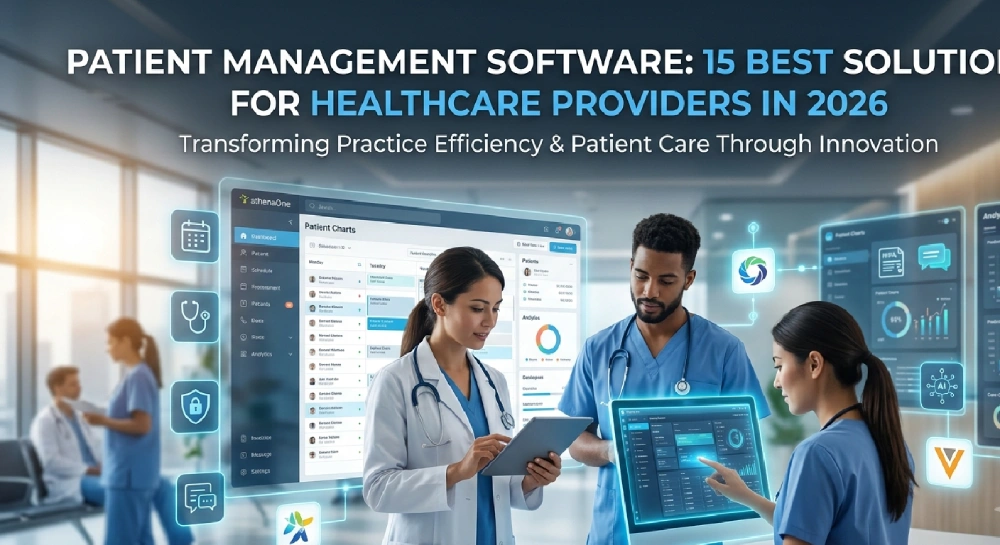
Running without healthcare data management software is hard. You have patients to see. Charts to update. Insurance to file. Appointments to schedule. It never stops. But here is the thing. The right patient management software changes everything.
It keeps patient data in one place, automates the boring stuff and lets you focus on what actually matters – patient care.
A good patient management system handles scheduling, billing, medical records, and communication. No more chasing down the patient information system.
And the best part? The technology has gotten so much better. AI can now handle administrative tasks automatically. Patient portals let people book their own appointments. Everything flows.
What Great Patient Management Software Does
- Centralizes Patient Data
All medical history, treatments, lab results, and appointment details in one place. Access it anytime, anywhere. Cloud-based options make this simple.
- Handles Scheduling and Appointments
Patients book online. Reminders go out automatically. No-show rates drop. Your front desk stops drowning in phone calls . Some systems now use AI to answer phones and book appointments directly.
- Secures Patient Information
HIPAA compliance matters. Strong encryption. Role-based access. Audit trails. Safe data handling.
- Simplifies Billing and Payments
Create bills, accept payments, send insurance claims. All from one system. Fewer mistakes. Faster payments.
- Improves Communication
Secure messaging. Appointment reminders. Follow-up alerts. Patients stay informed and engaged with patient management software.

15 Best Patient Management Solutions in 2026
1. athenaOne
A cloud-based system that updates automatically. No manual upgrades. Features include AI-determined copay amounts, ambient note-taking, multilingual support, and smart interoperability that pulls in patient data from other providers.
2. OpenEMR
Free and open-source. Full control over your software. Used by solo practices and small clinics. Requires IT expertise to set up and maintain.
3. Hippocrate
Cloud-based, free for solo practitioners. Charting, scheduling, e-prescribing, telemedicine, and lab integrations. Built for physicians who want a turnkey system with no IT overhead.
4. CharmHealth
Free for up to 50 patient encounters per month. Cloud-based with charting, scheduling, patient portal, and practice management. Good for small clinics.
5. Healthie
Free for up to 10 active clients. Virtual-first platform. Charting, scheduling, telehealth, client portal with food and activity tracking. Built for wellness, nutrition, and mental health providers.
6. Oscar EMR
Free and open-source. Strong in primary care and community clinics. Chronic disease management tools and secure messaging. Requires IT capacity.
7. Veeva Vault Patient CRM
Purpose-built for life sciences. HIPAA-compliant. Manages patient enrollment, consent, journey workflows, and communication. Strong care coordination features.
8. Sessions Health
Cloud-based, free for up to 3 clients. Designed for mental health professionals. Progress notes, intake forms, scheduling, billing, and telehealth. Tailored for therapy workflows.
9. CarePatron
Free plan with unlimited clients. Scheduling, video calls, automated billing, client portal. Good for solo therapy, coaching, and wellness practices.
10. Buddy Healthcare
CE-marked as a Class IIa medical device. Uses automatic and manual labels to flag patient risks like “High fall risk” or “BMI > 35.” Integrates with EHRs through HL7 and FHIR.
11. Tebra EHR
Scored well in 2026 comparisons. Strong patient engagement features and clinical patient documentation software. Good for practices prioritizing patient communication and engagement.
12. AdvancedMD
Cloud-based with strong reporting and billing tools. Good for mid-sized practices that want robust revenue cycle management alongside clinical features.
13. NextGen Enterprise
Strong overall scores for functional requirements. Good for larger practices needing comprehensive clinical charts, documentation, and dashboard analytics.
14. Queensland Health ieMR
Integrated electronic medical record for hospitals. Real-time patient data, automatic vital sign uploads, clinical decision support, and closed-loop medication management.
15. HealthConnect
AI-driven healthcare ecosystem. Supports AI-assisted appointment booking, automated medication alerts, intelligent prescription management, and real-time health monitoring.
What to Look For
When choosing software for patient management, focus on:
– Ease of use for your staff
– Integration with your existing systems
– Scalability as your practice grows
– Security and compliance features
– Cost and pricing structure
– Patient engagement tools
– Customer support availability
Why Patient Software for Doctors Is No Longer Optional
Doctors are buried in paperwork. Hours spent on charting and data entry, hours that should be with patients. That’s why patient software for doctors is no longer a luxury. It’s a necessity.
Good software handles the tedious stuff automatically. It organizes patient info, streamlines workflows, and gives you back time. More time means more focus on what matters.
The right management software for healthcare transforms your practice. No more chasing paper files. No more messy scheduling. No more manual entry errors. Appointments book automatically. Records are instantly accessible. Billing flows smoothly. Staff spend less time on admin and more time helping patients.
That’s the real power of good software. It changes how your team works and how patients experience your care.

How Patient Entry Software Simplifies Your Front Desk
Patient entry software is your front desk’s best friend. Think about it — phones ringing, patients filling forms, staff juggling everything.
But patient entry software fixes that. Patients check in digitally. They update their own info. They sign forms on tablets or phones. Staff don’t waste time on manual entry. Info flows straight into your system. Faster. More accurate. Fewer errors. Shorter wait times.
What does that mean?
- Faster check-ins.
- Happier patients.
- Staff focus on patient needs instead of drowning in paperwork.
Healthcare is moving toward digital front doors, and patient entry software makes it work.
Conclusion:
The best patient management software does not just organize your practice. It transforms it. It frees up time. It reduces errors. It improves patient satisfaction.
Take your time. Evaluate your options. Pick the solution that fits your practice size, specialty, and workflow.
The right choice for patient management software will save you hours every week. And that is time you can spend on what truly matters, your patients.
Frequently Asked Questions
What is patient management software?
Patient management software is a digital system that helps healthcare practices handle patient data, appointments, billing, communication, and medical records all in one place.
What are the benefits of patient management software?
Benefits of patient management software include organized records. Automated scheduling. Secure data. Simplified billing. Better communication. It saves time and cuts errors.
What is a patient administration system software?
Patient administration system software manages the administrative side of healthcare — appointments, patient registration, billing, insurance claims, and reporting. It handles the business operations so clinicians can focus on clinical care.
What is a patient record management system?
A patient record management software stores and organizes patient medical records digitally. It replaces paper charts and makes patient histories, treatment plans, lab results, and medication lists accessible instantly.
What is patient check in software?
Patient check in software streamlines the arrival process. Patients can check in digitally, update their information, sign forms, and verify insurance. It reduces front desk workload and wait times.
What is patient access software?
Patient access software helps patients schedule appointments, view records, communicate with providers, and manage their healthcare online. It improves patient engagement and satisfaction through easy digital access.
What is the best CRM for medical practice?
The best CRM for medical practice depends on your needs. athenaOne is strong for network-based care. Healthie works well for virtual-first wellness practices. Veeva Vault Patient CRM is built for life sciences and patient service management systems.
What is an online medical appointment booking system?
An online medical appointment booking system lets schedule appointments through your website or portal. It sends automatic reminders, cuts down no-shows, and frees up your front desk.
What is healthcare referral management software?
Healthcare referral management software tracks and manages patient referrals between providers. It ensures timely specialist visits, cuts down lost referrals, and improves care coordination across the board.
What is an electronic patient management system?
An electronic patient management system digitizes all patient management tasks — scheduling, records, billing, and communication. It moves practices away from paper-based workflows toward efficient digital operations.