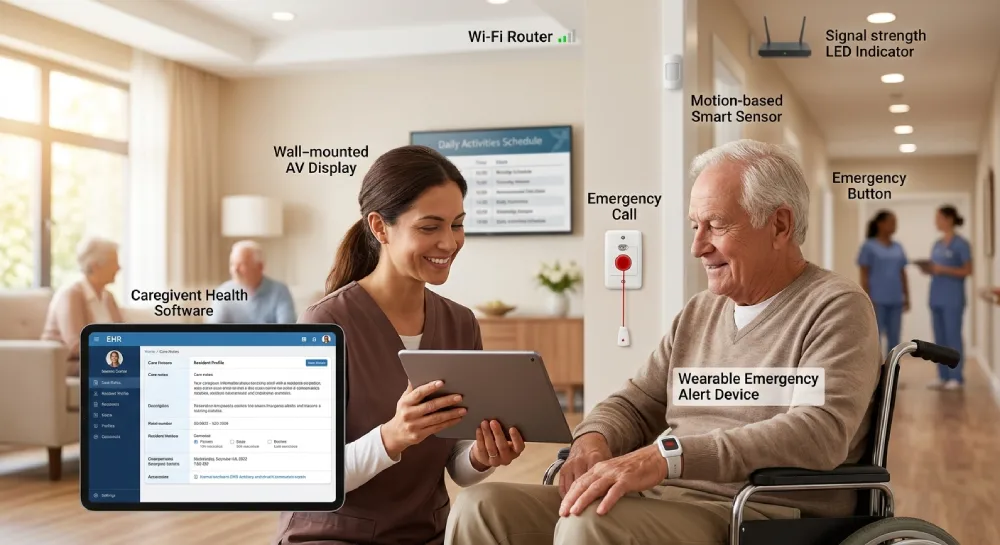
Technology for assisted living facilities can make care, safety, communication, and administrative work easier to manage. However, there are different kinds of residents, staff, duties, and needs to consider. The right technology like EHR software, emergency systems, sensors, and the internet can all contribute to efficient daily operations. It is not about embracing more technology. It is rather about embracing the right technology that can improve care, safety, and ease of management.
What Technology Is Used in Assisted Living Facilities?
The answer to what technology is used in assisted living facilities can include EHR software, emergency call systems, fall detection, medication tools, access control, smart sensors, Wi-Fi, and communication platforms.
Each tool should help in addressing a particular need. Sensors can support safety, while EHR systems can organize resident records and care documentation.
Technology for Assisted Living Resident Safety
Technology for assisted living facilities can improve safety through emergency call buttons, wearable alerts, motion sensors, door monitoring, and fall detection systems. These tools can notify staff when attention may be needed. They can complement caregivers rather than replace human observation and care.
A Simple Example
If a resident falls in a private area, an emergency alert can notify staff quickly. This can minimize the need for someone else to discover the situation first.
EHR Software for Better Care
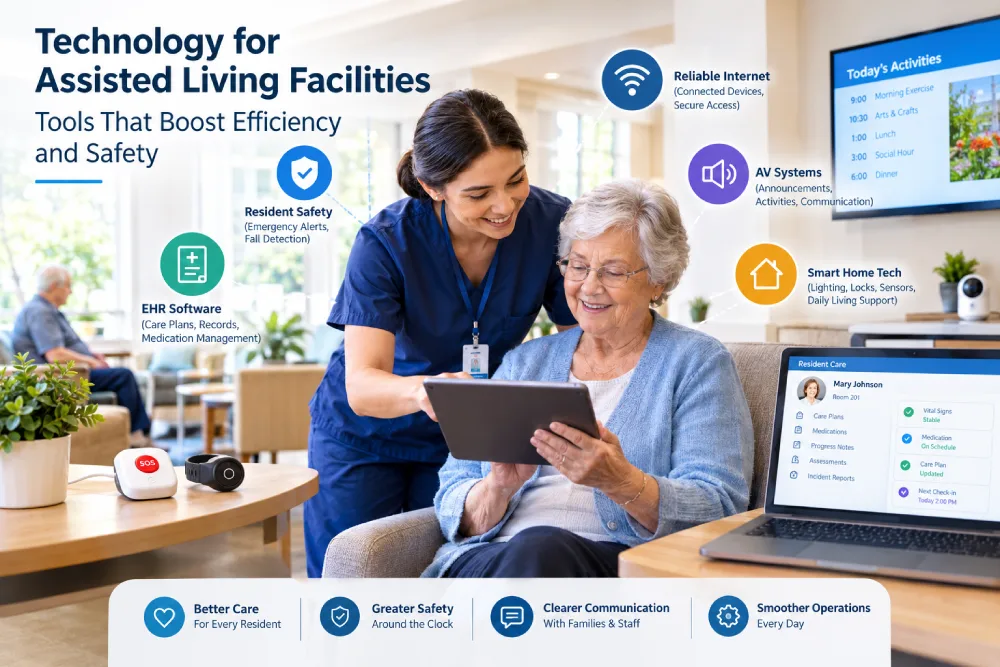
Technology for assisted living facilities can also help in managing important resident information. Assisted living EHR software can organize care notes, assessments, medication records, and care plans.
The benefits of EHR include organized documentation and easier access to authorized information. Digital records can also minimize the dependence on scattered paper files.
What EHR Systems Can Manage
Depending on the platform, EHR solutions can facilitate:
- Resident records
- Care plans
- Progress notes
- Medication documentation
- Staff observations
- Incident records
- Authorized information sharing
Facilities should review security, user permissions, privacy practices, and applicable HIPAA regulations when selecting an EHR system.
Internet Technology and Connected Devices for Assisted Living
Reliable internet is a crucial part of technology for assisted living facilities. Staff may need it for EHR platforms, mobile devices, communication tools, and connected sensors. Assisted living internet technology should ensure dependable and secure access. Facilities can consider Wi-Fi coverage, network security, device management, maintenance, and backup options.
Assisted Living AV Systems
Assisted living AV systems can support announcements, activities, training, communication, and resident engagement. Digital displays can share schedules and notices. Audio systems can support announcements, while video conferencing can help residents communicate with family.
Smart Home Technology
Smart-home technologies represent another category of technology for assisted living facilities. Smart lighting, locks, alarms, thermostats, and robots can help with residents’ daily living. Moreover, connected devices allow for detecting deviations from the norm. However, these technologies should be used in the context of personal care, not as a replacement for human interaction.
How to Choose Technology for Assisted Living Facilities
Choosing technology for assisted living facilities should start with a clear problem. A simple selection process can help facilities avoid adopting unnecessary technology.
Identify the need: Focus on safety, documentation, communication, connectivity, or staff efficiency.
Check compatibility: Ensure new tools work with existing systems.
Review security: Examine privacy, access controls, and compliance requirements.
Test usability: Ensure staff can use the technology during normal workflows.
Plan support: Include training, maintenance, updates, and troubleshooting.
For example, an EHR should not be selected only for its features. Staff also need to document care quickly and get authorized information easily.
Technology Services for Assisted Living Facilities
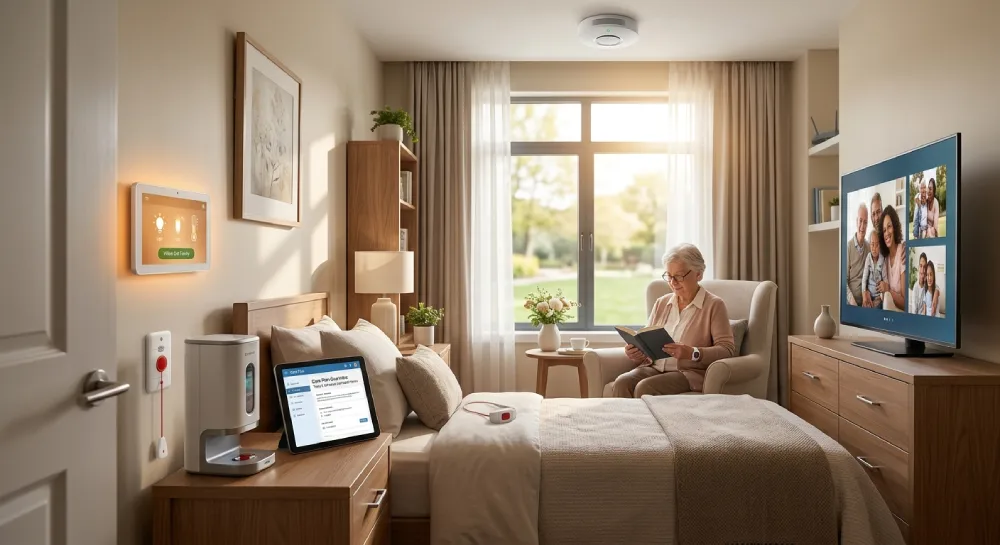
Facilities may need technical support for setup, maintenance, and troubleshooting. Relevant services can include network setup, Wi-Fi management, EHR support, device configuration, AV installation, and security technology.
Ongoing support can help ensure systems remain reliable. Staff training and regular security reviews should also be part of the technology plan.
Conclusion
Technology for assisted living facilities should support safer care, efficient documentation, reliable communication, and simpler daily operations. EHR software, emergency systems, connected devices, reliable networks, and AV solutions can each address different facility needs. The right approach is to select technology based on resident needs, staff workflows, security, reliability, and ease of use.
Frequently Asked Questions
What is technology for assisted living facilities?
It includes digital tools that support resident care, safety, communication, and facility operations. Examples include EHR software, emergency alerts, sensors, smart devices, and communication systems.
What technology is used in assisted living facilities?
Common technologies include EHR systems, fall detection, emergency call devices, medication tools, access control, smart sensors, Wi-Fi, and AV systems.
How does technology improve resident safety?
Technology can alert staff about falls, emergencies, unusual activity, or other situations that may require attention. It can give caregivers an additional avenue for identifying potential safety concerns.
What is assisted living EHR software?
Assisted living EHR software digitally manages resident and care information. Depending on the system, it can handle assessments, care plans, medication records, notes, and other documentation.
What are the benefits of EHR systems?
The benefits of EHR systems can include organized records, easier documentation, and faster access to authorized information. Their value lies in the system and how effectively staff can use it.
Why is internet technology important in assisted living?
Internet connectivity supports EHR platforms, communication tools, connected devices, and cloud services. A secure and reliable network can ensure these systems are accessible.
What are assisted living AV systems used for?
They can facilitate announcements, activities, digital schedules, training, entertainment, and video communication. The setup should be based on the facility’s needs.
Can smart-home technology help assisted living residents?
Yes. Smart lighting, sensors, environmental controls, and connected devices can support convenience, accessibility, and monitoring. Privacy and ease should be considered before implementation.
Does assisted living technology need to follow HIPAA regulations?
It depends on the information handled and the organizations involved. Facilities should review applicable HIPAA regulations, privacy practices, and security controls before implementation.
How should assisted living organizations choose new technology?
Start by identifying a specific operational or care need. Then evaluate compatibility, security, usability, cost, training, maintenance, and technical support before making a decision.