Running a home care agency is messy. Scheduling caregivers, tracking patient progress, billing insurance, staying compliant. It gets overwhelming fast.
Home health care software is not just some fancy tech upgrade. It is the difference between chaotic operations and a well-oiled machine. Without it, agencies drown in paperwork and miss out on growth.
What Is Home Health Care Software
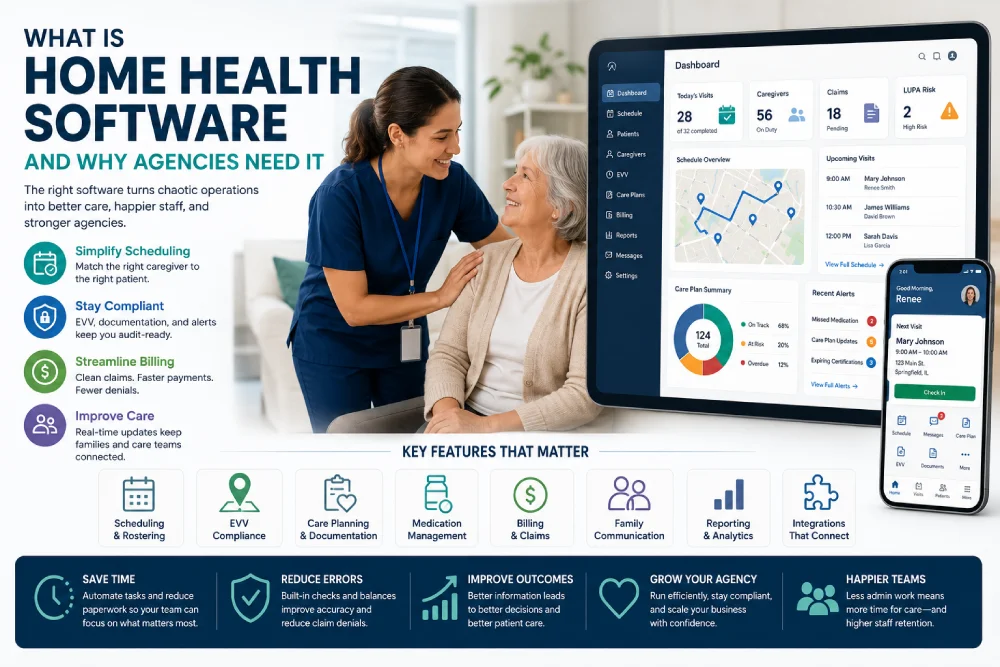
Home health care software is a digital platform built specifically for home-based care agencies. It handles scheduling, billing, patient records, and staff communication all in one place .
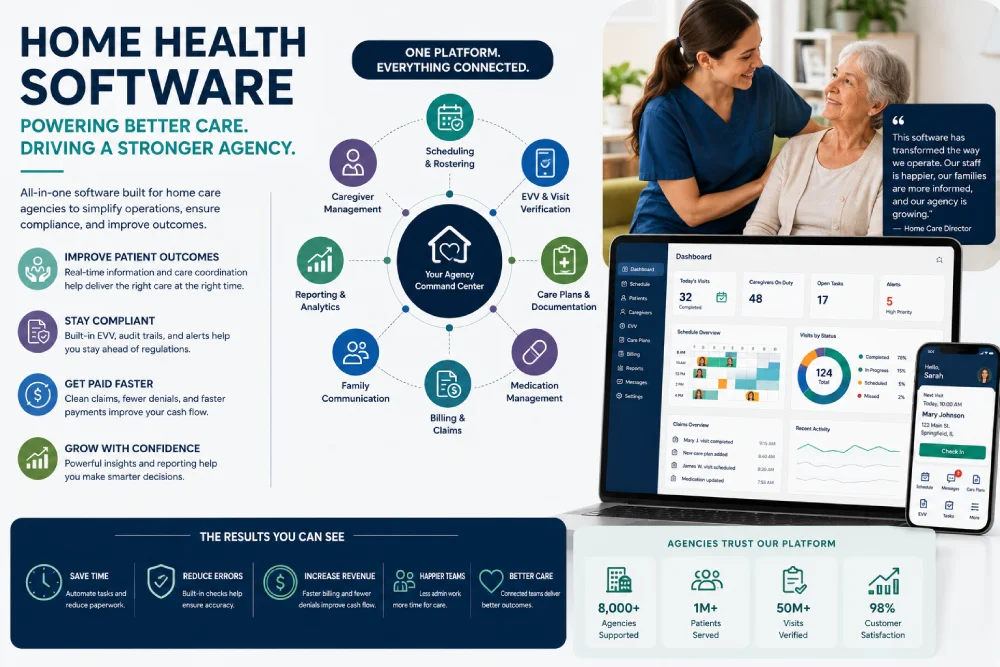
Think of it as the command center. Every patient visit gets tracked. Every caregiver shift gets scheduled. Every insurance claim gets processed. When done right, home health care software shows exactly how the agency is performing.
Home care management software covers all the bases. It digitizes care plans, manages medications, and keeps families informed. No more losing paperwork or chasing down signatures on home care crm features
Why Agencies Need It Now
The demand for home care is exploding. More seniors want to age at home. More families want options. But the old ways do not work anymore.
Here is why software for home care agency is essential:
- Scheduling chaos: Matching caregivers with patients takes hours without good tools.
- Compliance headaches: Medicare rules change constantly. Manual tracking misses things .
- Billing nightmares: Insurance claims get rejected over small errors.
- Staff burnout: Too much admin work drives caregivers away.
Agencies using home health software programs run smoother. They grow faster. They keep staff happier.
Essential Features to Look For in home health care software
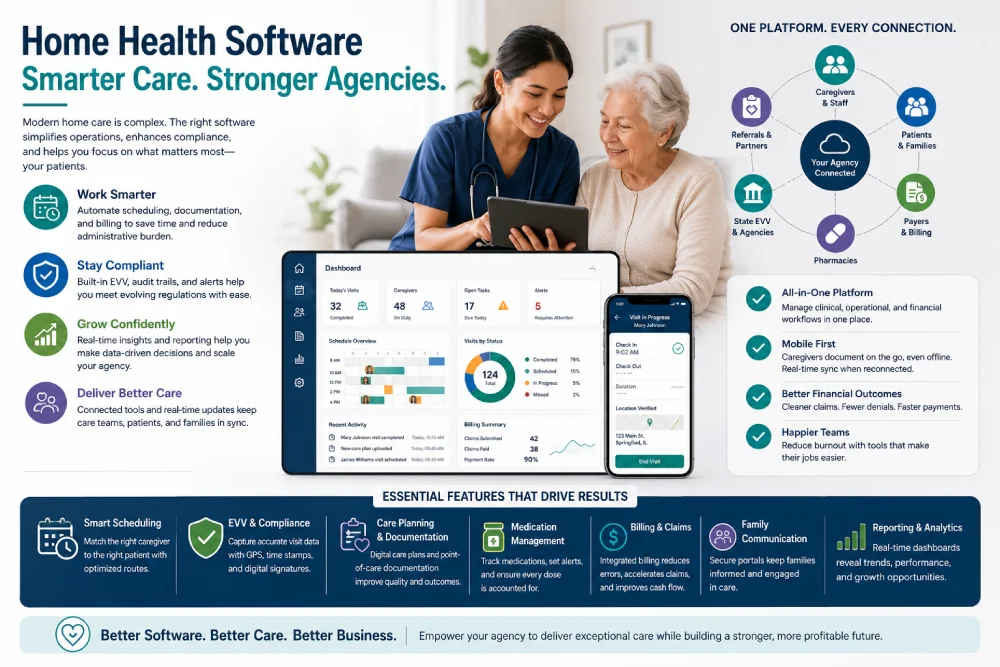
Not all home care agency essential capabilities are created equal. Here is what actually matters for software for home care business:
- Scheduling and rostering: Good home care scheduling software matches the right caregiver to the right patient. It tracks availability, handles last-minute changes, and optimizes driving routes . One agency solution even predicts travel times between visits to reduce gaps .
- Electronic visit verification (EVV): State Medicaid programs require EVV under federal law . Good software for home care agencies captures GPS location, time stamps, and caregiver signatures. No more fudging timesheets.
- Care planning and documentation: Digital care plans replace paper binders. Nurses document at the point of care on mobile devices . Systems like Birdie use offline mode so notes save even without internet . This is what makes home care software solutions truly useful.
- Medication management: Electronic Medication Administration Records (eMAR) track every dose given . Alerts flag missed medications. Families get peace of mind.
- Billing and claims: The right home care agency crm integrates with billing systems. Claims go out clean. Payments come in faster. One platform even offers “same day” authorization and payment processing .
- Family communication: Portals let family members check in on loved ones . They see care plans, visit updates, and photos. This builds trust and reduces phone calls to the office.
- Reporting and analytics: Data shows what is working. Home care management solution dashboards track key metrics. Census by payer. LUPA risk. Staff turnover. Real numbers drive real decisions.
Different Software for Different Needs
Home health software programs vary based on what the agency does.
Home health care software focuses on Medicare-certified agencies. It handles OASIS assessments, skilled nursing documentation, and therapy notes. Axxess serves over 8,000 small and mid-size agencies with fast onboarding . Homecare Homebase runs some of the largest home health and hospice chains in the country .
Hospice software handles end-of-life care. It tracks interdisciplinary group meetings, bereavement services, and volunteer coordination. Platforms like Hospice Tools eDocs support the full hospice journey from intake through grief support .
Personal care software serves non-medical home care. It focuses on scheduling, task tracking, and private pay billing. AxisCare is one example, recognized in 2026 for its mobile app usability.
Some agencies need best home health software that combines all three. This is where enterprise solutions like WellSky and KanTime come in, handling multiple service lines in one database .
The Integration Question
Home health software programs do not live in a bubble. They need to talk to other systems. This is where home care management solution integration matters.
Good home care software for agencies integrates with:
– Payroll systems to calculate wages automatically
– Accounting software for general ledger
– Referral management platforms
– State EVV aggregators
– Pharmacy systems for medication orders
– Telehealth platforms for virtual visits
When systems do not talk, staff do double data entry. Errors creep in. Time gets wasted.
Real-World Impact
Here is what happens when agencies get it right.
SOS Care Management System users report reduced paperwork and more time for patients . CareLineLive, built by someone who watched his grandfather struggle with poor home care communication, focuses on sharing updates with families . Agencies using Radar Healthcare for hospice saw incident reporting increase and audits become instantly reportable .
The numbers back this up. Agencies report cleaner claims and faster payments with back-office tools that flag errors before submission . Mobile apps with offline mode mean notes get written during visits, not at 10 PM at home .
Conclusion
Home health care software is essential for modern agencies. It solves scheduling chaos, keeps compliance tight, and makes billing work. The right home care management software saves time, reduces errors, and gives caregivers more time with patients.
Without it, agencies sink under paperwork. With it, they grow. The difference is that simple.
Frequently Asked Questions
What is home health care software and what does it do?
Home health care software is a digital platform that helps home care agencies manage scheduling, billing, patient records, staff communication, and compliance.
Why do home care agencies need specialized software instead of generic tools?
Generic tools like spreadsheets or standard scheduling apps cannot handle the complexity of home care.
What is the difference between home health and home care software?**
Home health software serves Medicare-certified agencies with skilled nursing, therapy, and OASIS documentation.
How does home care software help with scheduling?
It matches caregivers to patients based on availability, skills, and location. It optimizes driving routes, handles last-minute changes, and predicts travel times. Good scheduling software turns hours of manual work into minutes.
What is EVV in home care software?
Electronic Visit Verification tracks caregiver arrivals, departures, and activities at patient visits. It captures GPS, time stamps, and signatures. State Medicaid programs require it under federal law.
Can home care software handle billing and claims?
Yes. Good software integrates billing tools that check claims for errors before submission, track denials, and speed up payments.
How does software improve patient care?
It digitizes care plans so everyone on the team stays updated. Nurses document at the point of care. Families get real-time updates through portals.
Is home care software expensive?
Costs vary widely. Small agencies might pay $500-$2,500 per month. Medium agencies $2,500-$6,000. Large agencies $6,000-$15,000+. Setup fees range from $10,000 to $40,000 depending on the platform .
How long does it take to implement home care software?
Smaller platforms like Axxess onboard in weeks. Enterprise solutions like Homecare Homebase take months.